Maria Eufrasia Iaconis is a venerable of the Catholic Church (1867 - 1916).
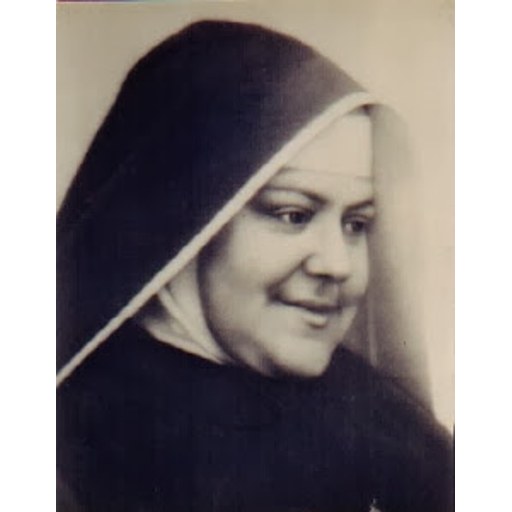
AnonymousUnknown author, no author disclosure
License: Public domain
Maria Eufrasia Iaconis
Venerable- Life Span
- 1867 - 1916 (age 49)
- Gender
- female
- Church
- Catholic
Places
Roles & Family
Biography
Maria Eufrasia Iaconis was an Italian Roman Catholic religious sister whose life spanned the late nineteenth and early twentieth centuries. She was born in 1867 in Casino, a rural community in Calabria in southern Italy that later took the name Castelsilano. Calabria in that era remained one of the poorest regions of the newly unified Kingdom of Italy. Landholding patterns, brigandage in the aftermath of unification, and limited educational opportunities for girls shaped the social world in which she grew up. Parish life and Marian and Eucharistic devotion were central to popular religion. Precise information about her parents, siblings, or the exact date on which she first expressed a religious vocation is not available in widely published sources.
In the later years of the nineteenth century she left Italy for Argentina, joining the substantial flow of Italian emigrants who settled in the Río de la Plata region. Between the 1870s and the First World War, millions of Italians crossed the Atlantic; Argentina was a principal destination, and Buenos Aires became home to one of the largest Italian communities outside Italy. Female religious congregations, many of them recently founded or reformed in Italy, sent sisters to staff schools, orphanages, hospitals, and parish catechetical programs for these immigrants and for the wider population. Iaconis’s work took place within this missionary and immigrant apostolate, though the specific congregation to which she belonged and the precise year of her departure are not uniformly recorded in general reference works.
She remained in Argentina until her death in Buenos Aires in 1916, during the First World War, a conflict that also affected transatlantic religious and family ties. Notices that survive in Catholic biographical compilations present her as a sister devoted to prayer, the education of young women, and works of mercy. Because she belongs to the large number of relatively little-known Italian foundresses or local superiors of modest institutes, many particulars of her daily life, her spiritual writings if any existed, the exact name and charism of her religious family, and the circumstances of her final illness remain sparsely documented outside specialized congregational archives.
Her memory has been preserved principally within the religious community associated with her and in local Church records in Calabria and in the Archdiocese of Buenos Aires. She has not been canonized or beatified by the Holy See, and no universal feast day has been assigned to her. Her biography, so far as it can be reconstructed from available notices, illustrates a broader historical pattern of the late nineteenth and early twentieth centuries: the contribution of Italian women religious to the pastoral care of the Italian diaspora in the Americas. That movement paralleled the better-documented labors of saints such as Frances Xavier Cabrini yet involved hundreds of lesser-recorded sisters whose lives were spent in classrooms, infirmaries, and immigrant neighborhoods.