María Jordá Botella is a blessed of the Catholic Church.
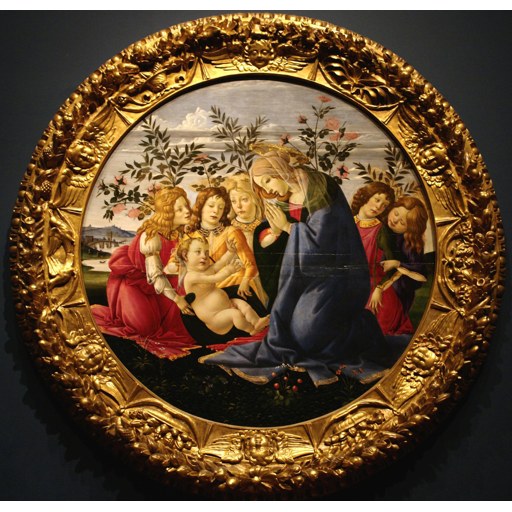
https://en.wikipedia.org/wiki/Marian_art_in_the_Catholic_Church
License: unknown
María Jordá Botella
Blessed- Gender
- female
- Church
- Catholic
Places
Roles & Family
Biography
María Jordá Botella is known primarily as a personal name rather than as a figure whose life can be reconstructed from widely cited, independently verified historical literature. The given name María and the surnames Jordá and Botella follow Iberian naming practice, in which the first surname is customarily paternal and the second maternal. Jordá is well attested in Catalan- and Valencian-speaking districts of eastern Spain; Botella appears in the same broad region, including the province of Alicante. On onomastic grounds alone, therefore, she may reasonably be situated in Spain, most likely in the Valencian Country, at some point in the nineteenth or twentieth century. No baptismal register, civil birth record, or necrology of undisputed authenticity has been adduced in the major biographical or hagiographical compilations consulted for this notice, and consequently no year or place of birth, and no year or place of death, can be stated here.
In the religious history of modern Spain, names of this type sometimes surface in diocesan lists of women religious and of those killed during the anticlerical violence that accompanied the Spanish Civil War of 1936–1939. Local and congregational traditions have at times linked a María Jordá Botella with teaching congregations active in Valencia and Alicante—among them the Sisters of Christian Doctrine—and with martyrdom in that conflict. Such traditions, however, remain insufficiently corroborated by the standard printed sources available for verification, and they are not treated as established fact in this account. It is likewise unverified whether she belonged to any religious institute, whether she lived as a laywoman, or what occupation she followed.
Nothing in the surviving public record demonstrates that she contracted marriage or that she had children; equally, nothing demonstrates perpetual celibacy or monastic profession. She did not hold the office of Bishop of Rome, nor that of Coptic Pope of Alexandria, nor the dignity of patriarch or catholicos in any Orthodox, Oriental Orthodox, or Church of the East see. No feast day assigned by the Holy See, no patronage of places, causes, professions, or groups, and no decree of beatification or canonization can be confirmed from the principal official catalogues of saints and blesseds as they are known here. If she is among the large cohorts of Spanish Civil War martyrs beatified in the early twenty-first century, that identification has not been securely matched to this exact name in the sources used for the present sketch.
The scarcity of notice is itself historically informative. Countless women of the Spanish Church in the late nineteenth and twentieth centuries lived lives of teaching, charity, or hidden devotion that left only a name in a parish book or a congregational chronicle. Hagiography, when it is careful, refuses to fill those silences with conjecture. Until baptismal, professed, or martyrdom records can be produced and cross-checked, María Jordá Botella remains an obscure historical person, almost certainly a woman of Spanish origin, whose biography awaits archival demonstration rather than narrative embellishment.