Maria Josefa Karolina Brader is a venerable of the Catholic Church (1860 - 1943). Maria Josefa Karolina Brader's feast day is celebrated on 27 February.
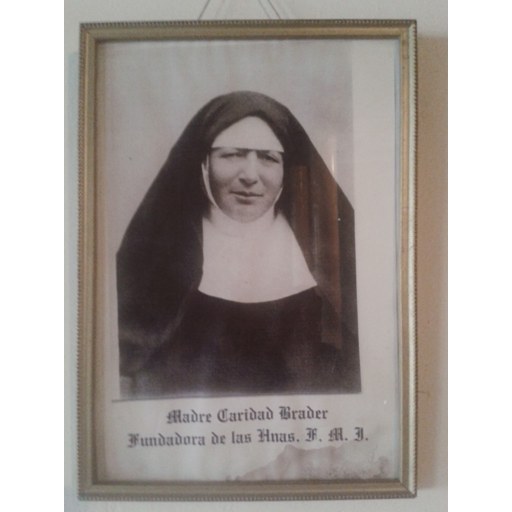
Ulises Hernandez Pino
License: Public domain
Maria Josefa Karolina Brader
Venerable- Life Span
- 1860 - 1943 (age 83)
- Feast Day
- 27 February
- Gender
- female
- Church
- Catholic
Places
Roles & Family
Religious Information
Canonization
Biography
Maria Josefa Karolina Brader was born on 14 August 1860 in Kaltbrunn, in the Swiss canton of St. Gallen, the only child of the tailor Joseph Sebastian Brader and Maria Carolina Zahner. Her father died while she was still a young child, and she was raised by her mother in a devout Catholic household. She received a solid education and was regarded as both intelligent and pious. Although marriage was the conventional path open to her, she discerned a vocation to consecrated life. In 1880 she entered the Franciscan Capuchin Tertiary Sisters of the Holy Family at the convent of Maria Hilf in Altstätten. She received the religious name María Caridad of the Holy Spirit (Mary Charity of the Holy Spirit) and made her profession of vows in the early 1880s, embracing a Franciscan life of poverty, prayer, and apostolic service.
In 1888 she volunteered for the foreign missions when the Bishop of Portoviejo in Ecuador requested sisters for educational and pastoral work. She and a small group of companions traveled to South America and began missionary activity in Ecuador, including among rural and indigenous communities. Anticlerical politics and instability soon made the Ecuadorian mission untenable. The sisters accepted an invitation to move to the diocese of Pasto in southern Colombia. In 1893, at Túquerres in the Andean department of Nariño, Brader founded a new institute, the Congregation of the Franciscan Sisters of Mary Immaculate. Its purpose was the Christian education of girls, especially the poor and indigenous, together with missionary outreach in isolated regions. She served as the congregation’s first superior, formed its earliest members, and opened schools and residences despite scarce resources and difficult mountain terrain.
Under her leadership in the late nineteenth and early twentieth centuries the congregation expanded through Colombia. She was known for personal austerity, Eucharistic and Marian devotion, and a practical concern for the social and spiritual needs of students and local people. She learned Spanish and adapted European religious life to Andean conditions. The sisters combined classroom teaching with catechesis and care for orphans and the sick. In later decades she continued to govern the institute and to visit its houses even as her health declined. She died in Pasto on 27 February 1943.
Her reputation for holiness led to the introduction of a cause of beatification. After the recognition of a miracle attributed to her intercession, Pope John Paul II beatified her on 23 March 2003. Her liturgical memorial is kept on 27 February. She has not been canonized. The Franciscan Sisters of Mary Immaculate continue the educational and missionary work she began in Colombia and elsewhere.