Maria Teresa Gonzalez-Quevedo Cadarso is a venerable of the Catholic Church (1930 - 1950).
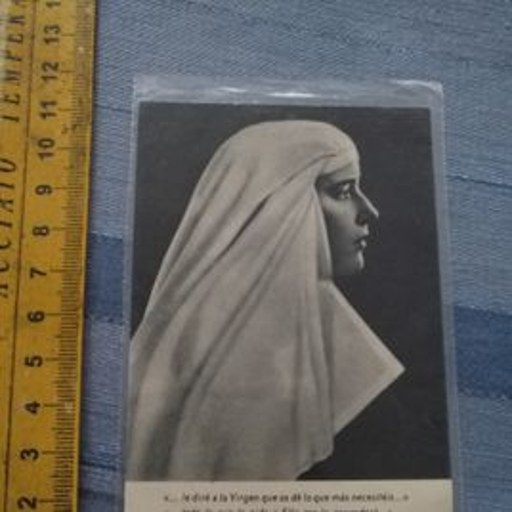
https://www.todocoleccion.net/postales-religiosas-recordatorios/maria-teresa-gonzalez-quevedo-cadarso-jesus-estampita~x271028868
License: unknown
Maria Teresa Gonzalez-Quevedo Cadarso
Venerable- Life Span
- 1930 - 1950 (age 20)
- Gender
- female
- Church
- Catholic
Places
Roles & Family
Religious Information
Biography
María Teresa González-Quevedo Cadarso was born on 14 April 1930 in Madrid, Spain, into a devout Catholic family. Her father, Félix González-Quevedo, was a military officer, and her mother was María del Carmen Cadarso. She grew up in Madrid in the years after the Spanish Civil War, receiving a Catholic education and showing from childhood a lively temperament together with marked piety, frequent attendance at Mass, and a strong devotion to the Blessed Virgin Mary, especially under the title of Our Lady of Mount Carmel.
At the age of eighteen, in 1948, she entered the Congregation of the Carmelite Sisters of Charity of Vedruna, a religious family founded in the nineteenth century by Saint Joaquina de Vedruna that unites Carmelite spirituality with active works of charity, particularly education and care of the sick and the poor. As a novice she was remembered by her superiors and companions for cheerfulness, obedience, love of the Eucharist, and a spirit of generous self-offering. She did not live long enough to make her first religious profession.
In early 1950 she fell seriously ill. After receiving the last sacraments she died in Madrid on 8 April 1950, a few days before her twentieth birthday. Those who knew her testified to her serenity and trust in God during her final illness. Her short life in religion and her reputation for holiness led to the opening of a cause for beatification. On 12 January 1996 Pope John Paul II promulgated the decree on her heroic virtues, declaring her Venerable. She has not been beatified or canonized. Devotion to her remains especially associated with youthful holiness and Carmelite life in twentieth-century Spain.