Maria Teresa Scandola is a venerable of the Catholic Church (1849 - 1903). Maria Teresa Scandola's feast day is celebrated on 1 September.
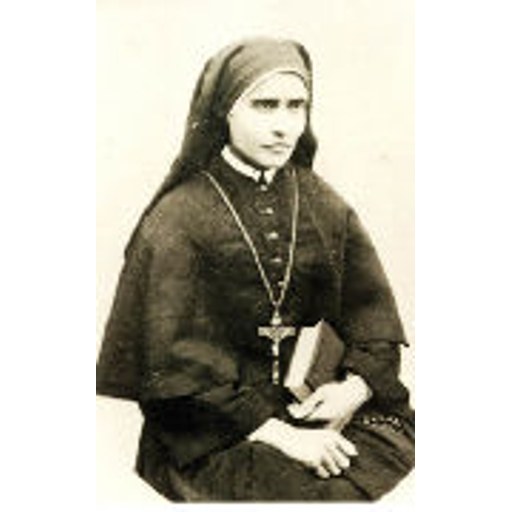
AnonymousUnknown author
License: Public domain
Maria Teresa Scandola
Venerable- Life Span
- 1849 - 1903 (age 54)
- Feast Day
- 1 September
- Gender
- female
- Church
- Catholic
Places
Roles & Family
Religious Information
Canonization
Biography
Maria Teresa Scandola, known in religion as Sister Maria Giuseppa (Giuseppina) Scandola, was born in 1849 at Bosco Chiesanuova, a mountain comune in the Lessinia highlands of the province of Verona. At the time of her birth the Veneto still belonged to the Austrian-ruled Kingdom of Lombardy–Venetia; it would pass to the Kingdom of Italy only in 1866. She grew up in a modest rural household amid the popular Catholicism of nineteenth-century country Veneto. As a young woman she was drawn to the missionary programme that Daniel Comboni was then promoting from Verona, above all his conviction that Africa should be evangelized with the participation of Africans themselves, and to the women’s institute he founded in 1872, the Pie Madri della Nigrizia, later known as the Comboni Missionary Sisters. In the mid-1870s, already in her late twenties, she entered that still-young congregation at Verona and received the religious name Maria Giuseppa.
After formation and profession she was assigned to the northeast African missions that formed the heart of the Comboni apostolate. Like other early sisters of the institute she served first in Egypt, where the congregation maintained houses that supported both local charitable work and the Sudanese mission further up the Nile. The Mahdist rising that began in the early 1880s wrecked the Catholic presence in the Sudan: stations were destroyed, missionaries were killed, enslaved, or driven out, and Comboni himself died in Khartoum in 1881. The sisters who remained in Egypt and along the surviving lines of communication lived through years of uncertainty, poverty, and interrupted plans. Only after the Anglo-Egyptian reconquest of the Sudan at the close of the nineteenth century could the Comboni family return in force to the Upper Nile.
Sister Maria Giuseppa was then sent into the southern Sudanese mission field, working at riverside stations among peoples of the Upper Nile, including Gondokoro, a historic post on the Nile south of Khartoum in the country of the Bari (in what is now South Sudan). There she gave herself especially to the care of the sick and to the ordinary, hidden labour of a missionary community: nursing, household service, and accompaniment of a newly re-established Christian flock. Witnesses remembered her as physically small and often unwell, yet persevering, gentle with sufferers, and faithful to the Comboni charism of service to the poorest. She was not a public founder or a writer of note; her reputation rested on constancy in a harsh climate and on charity exercised without display.
Climate, endemic disease, and years of austere missionary life wore her down. She died at the Gondokoro mission on 1 September 1903, not yet fifty-five years of age. She was buried in the mission field where she had served. A reputation for holiness remained alive in the Comboni family and among Sudanese Christians. Her cause of beatification was later introduced at Rome; after the recognition of a miracle attributed to her intercession, Pope Francis authorized her beatification, which was celebrated on 17 November 2018 in Khartoum. The Catholic Church keeps her liturgical memorial on 1 September, the anniversary of her death. She has not been assigned a wide official list of patronages; she is honoured chiefly as a model of obscure, persevering missionary service in the first generations of the Comboni sisters.