Marie des Anges is a blessed of the Catholic Church (1661 - 1717). Marie des Anges's feast day is celebrated on 16 December. Marie des Anges is the patron saint of Turin.
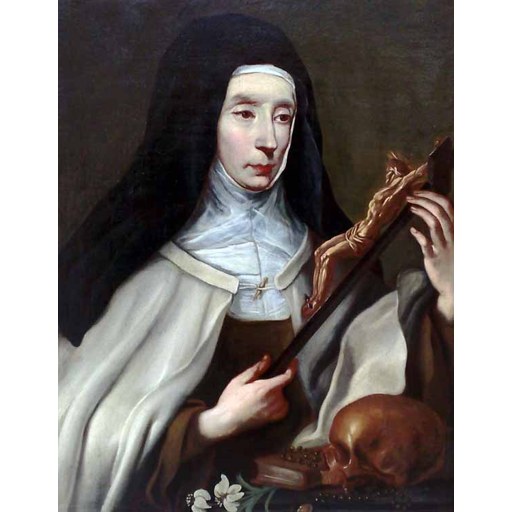
Unknown authorUnknown author
License: Public domain
Marie des Anges
Blessed- Life Span
- 1661 - 1717 (age 56)
- Feast Day
- 16 December
- Gender
- female
- Church
- Catholic
Places
Roles & Family
Religious Information
Patronage
Turin
Canonization
Biography
Marianna Fontanella, known in religion as Maria degli Angeli (Mary of the Angels; in French, Marie des Anges), was born in Turin in 1661, in the Duchy of Savoy, to the noble household of Giovanni Donato Fontanella, count of Santena, and Maria Tana. She grew up in a large patrician family and, according to the consistent testimony of later biographers, showed from childhood a strong inclination to prayer, fasting, and works of mercy. The expectations of her rank pointed toward marriage and court life, but she sought the cloister instead. After a period of family resistance she entered the monastery of the Discalced Carmelites of Santa Cristina in Turin in the mid-1670s, while still in her mid-teens, and received the Teresian habit under the name Maria degli Angeli. She made her religious profession in that community and remained a Carmelite of the Teresian reform for the rest of her life.
Within the monastery she became known for a severe personal austerity joined to the contemplative observances of the Discalced rule: prolonged prayer, night vigils, and a reputation among her sisters for mystical graces, including reported ecstasies and a gift of spiritual discernment. She served as novice mistress, forming younger nuns in the Carmelite life, and was elected prioress on more than one occasion, holding the government of Santa Cristina through years of both interior intensity and outward hardship. Contemporaries described her as combining strict enclosure with practical charity toward the poor of Turin. She fostered devotion to the Passion of Christ and to the Holy Shroud, then already a principal object of civic and ducal piety in Turin, and she was consulted by clergy, religious, and members of the Savoyard court for counsel. Her letters and the depositions later gathered for her cause present a figure of Teresian contemplative life rather than of public preaching or founding a new institute.
In the early eighteenth century her influence extended beyond the grille. She took part in the establishment of a Discalced Carmelite house at Moncalieri, sending sisters from Turin to begin that foundation. Local tradition, recorded in Turinese hagiography, associates her intercession and the prayers of her community with the deliverance of the city during the French siege of 1706, a turning point in the War of the Spanish Succession that left a deep mark on Savoyard memory. Duke (later King) Victor Amadeus II and other figures of the court are said to have held her in esteem. She continued in office and in a reputation for holiness into her fifties and died in her monastery in Turin on 16 December 1717. She was buried at Santa Cristina, where her remains have been the object of local veneration.
A cultus grew in Turin and in the Discalced Carmelite order after her death. The cause of beatification proceeded in the nineteenth century, and Pope Pius IX beatified her in 1865. She has not been canonized and is therefore honored as Blessed Maria degli Angeli (Blessed Marianna Fontanella). Her liturgical commemoration falls on 16 December, in the Carmelite calendar and in the Archdiocese of Turin. She is invoked as a patron of Turin, alongside the city’s older patrons, and remains a representative figure of post-Tridentine Carmelite life in Piedmont: a noblewoman turned contemplative nun whose reputation rested on enclosure, penance, and reported mystical gifts rather than on missionary or reforming activity in the world.