Marie Vojtěcha Hasmandová is a venerable of the Catholic Church (1914 - 1988).
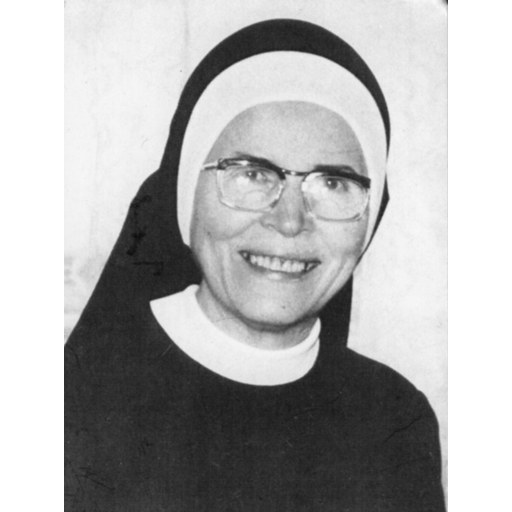
AnonymousUnknown author
License: Public domain
Marie Vojtěcha Hasmandová
Venerable- Life Span
- 1914 - 1988 (age 74)
- Gender
- female
- Church
- Catholic
Places
Relics & Where to Venerate
Location unknown
The bodily remains of Marie Vojtěcha Hasmandová are a first-class relic. Venerated at Cemetery in Znojmo-Hradiště.
Roles & Family
Religious Information
Biography
Marie Vojtěcha Hasmandová was born Marie Hasmandová on 25 March 1914 in the Moravian village of Huštěnovice, then in Austria-Hungary. She grew up in a Catholic rural family in the Czech lands and, as a young woman in the early 1930s, entered the Congregation of the Sisters of Mercy of St. Charles Borromeo, a nursing and charitable institute of French origin long established in Bohemia and Moravia. She received the religious name Vojtěcha, after Saint Adalbert of Prague (Vojtěch). Formed in the congregation’s tradition of prayer, community life, and care of the sick, she made religious profession and served as a nurse in hospitals and works of mercy run by the sisters.
The Second World War and, still more, the communist seizure of power in Czechoslovakia in 1948 subjected religious orders to systematic suppression. Convents were closed or interned, public vows and habits were restricted, and sisters were dispersed into factories, hospitals under state control, or internment houses. Sister Vojtěcha remained faithful to her vocation under these conditions. In the early 1950s she was arrested by the communist authorities, tried in connection with her religious activity and leadership among the sisters, and imprisoned for a number of years. After her release she returned to a tightly constrained form of community life, continuing to live her vows when many houses of the congregation had been secularized or placed under state supervision.
In 1970, while the churches were still under close state control, she was chosen as superior general of the Czech Borromean Sisters. She led the congregation through the remaining years of communist rule, encouraging hidden formation, care of elderly and infirm sisters, and quiet fidelity to the charism of mercy. Those who knew her remembered a woman of prayer, practical charity, and unshowy courage. She died in office on 21 January 1988 in Znojmo, still under the communist regime, a year before the Velvet Revolution restored legal freedom to religious life in Czechoslovakia.
The Diocese of Brno opened a cause for her beatification in 1996. In the Catholic Church she is honored as a Servant of God. Her memory is kept especially among Czech Catholics as a twentieth-century witness to religious perseverance under totalitarian persecution, rather than as a figure with an assigned feast or public cult beyond the cause itself.