Marta d'Astorga is a saint of the Catholic Church (d. 249). Marta d'Astorga's feast day is celebrated on 23 February. Marta d'Astorga is the patron saint of Astorga.
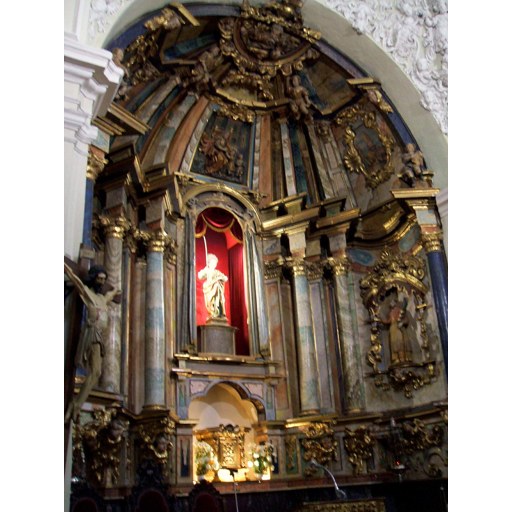
Zarateman
License: CC0
Marta d'Astorga
Saint- Life Span
- d. 249
- Feast Day
- 23 February
- Gender
- female
- Church
- Catholic
Places
Roles & Family
Patronage
Astorga
Biography
Marta de Astorga, also known as Saint Martha of Astorga, was a Christian virgin martyr of the third century associated with the city of Astorga, the ancient Asturica Augusta, in the northwest of the Iberian Peninsula (today in the province of León, Spain). Almost no contemporary documentation of her life survives. What is known comes from later hagiographical tradition and from the local cult that grew up around her. According to that tradition she was a native of Astorga who had consecrated her virginity to Christ. During an imperial persecution of Christians, identified in the legend with the measures taken under the emperor Decius in the mid-third century, she refused to sacrifice to the pagan gods. She was arrested, tortured, and put to death for her faith.
Her death is traditionally assigned to the year 249, a date that corresponds to the opening of the Decian persecution rather than to an independently attested chronology. No reliable account preserves the name of the magistrate who judged her, the precise form of her martyrdom, or details of her family and social standing. Like many early Hispanic martyrs, she is known chiefly through liturgical commemoration and local devotion rather than through a historically secure passio. She is not to be confused with the biblical Martha of Bethany, sister of Mary and Lazarus, nor with other saints who bear the name Martha.
Veneration of Marta took root in Astorga, of which she became the patron saint. Her feast day is observed on 23 February. Relics attributed to her have long been honoured in the city in connection with its cathedral. The Roman Martyrology records her as a virgin and martyr at Astorga in Spain. Because she belongs to the era of the early martyrs, her recognition as a saint predates the later centralized processes of beatification and canonization; her cult was established by popular and episcopal acclaim of the kind later classified as pre-congregation.
Devotion to Saint Martha of Astorga has remained primarily local, centred on the city and diocese that claim her. She occupies a place in the religious identity of Astorga alongside the city’s other Christian memories from late antiquity. Modern historians treat the biographical particulars of her legend with caution, while acknowledging the antiquity and continuity of her cult in the region.