Martin is a saint of the Catholic Church.
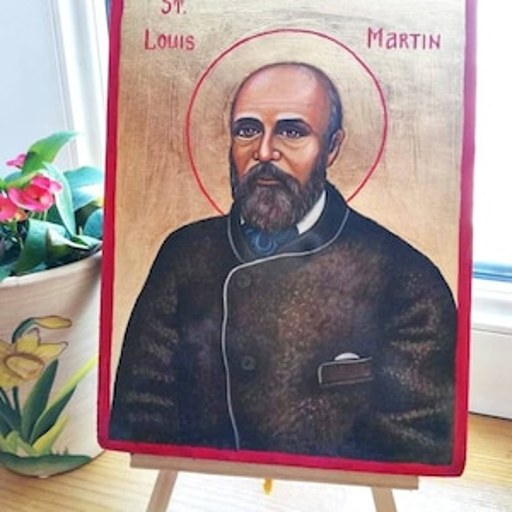
https://www.etsy.com/market/st_martin_icon
License: unknown
Martin
Saint- Gender
- male
- Church
- Catholic
Biography
The given name Martin (Latin Martinus, associated in antiquity with the cult of Mars) has been borne by many distinct Christian bishops, monks, popes, and lay saints. The query supplies no epithet, see, century, Wikidata identifier, or other disambiguation. Without that, it is not possible to assign a verified birth year, death year, burial place, feast day, or patronage to a single historical person. Filling those fields would require guessing which Martin is meant, which the sources do not permit.
Western hagiography most often means Martin of Tours, a fourth-century soldier of Pannonian origin who became bishop of Tours in Gaul. Later tradition places his death in the late fourth century (commonly 397) and his shrine at Tours. He is remembered for sharing his cloak with a beggar and for the monastery at Marmoutier; his cult made him a patron of soldiers, the poor, and many towns, with a Western feast on 11 November. A different figure is Pope Martin I, who held the Roman see in the seventh century, opposed Monothelitism, and died in exile in the Crimea. Martin of Braga was a sixth-century missionary bishop in Suevic Gallaecia. In the early modern Andes, Martín de Porres, a Dominican lay brother of mixed African and Spanish descent born in Lima in the late sixteenth century, was later canonized; he is invoked for mixed-race people, barbers, and social-justice causes, with a feast on 3 November. Other Martins include Martin of León, Martin of Vertou, and several popes numbered Martin (with well-known irregularities in medieval papal numbering).
These men lived in different centuries, held different offices, and were buried in different places. Whether the subject was a pope, a patriarch, a religious, married, or childless is therefore person-specific, as are canonization and beatification. No single structured biography can be written without arbitrarily choosing one Martin.
This record therefore notes only the name Martin and, on onomastic grounds, male sex. All other fields are left empty until a reliable source identifies a particular Martin. A full life requires specifying which one is intended.