Martinian and Processus is a saint of the Catholic Church. Martinian and Processus's feast day is celebrated on 2 July.
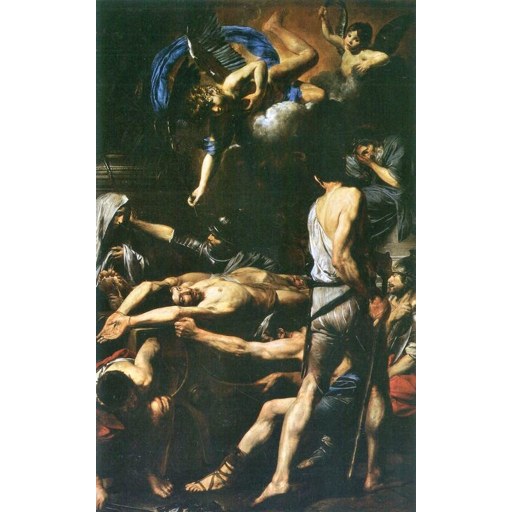
Valentin de Boulogne
License: Public domain
Martinian and Processus
Saint- Feast Day
- 2 July
- Gender
- male
- Church
- Catholic
Places
Relics & Where to Venerate
Location unknown
Pope Paschal I (817–824) translated the bones of the two martyrs to a chapel in the old Basilica of St
Roles & Family
Biography
Saints Martinian and Processus (Latin: Martinianus et Processus) are a pair of early Christian martyrs whose cult has been associated with the city of Rome since late antiquity. Later hagiographical tradition identified them as Roman soldiers who served as jailers of the apostles Peter and Paul in the Mamertine Prison (the Tullianum). According to this legend they were converted by Saint Peter, baptized by him after a spring miraculously appeared in the prison, then denounced, tortured, and beheaded; a pious woman named Lucina is said to have buried their bodies. These narrative details derive from a late Passio, generally regarded by modern scholars as pious fiction composed centuries after the events it purports to describe, and they cannot be treated as historical fact.
What is more securely attested is the existence of an ancient cult of two martyrs of these names in Rome. They were buried in a cemetery on the Via Aurelia, west of the city. By the end of the sixth century their tomb was a recognized place of pilgrimage and liturgy. Pope Gregory the Great preached one of his Gospel homilies there on their feast day, referring to the saints as soldiers who had won the crown of martyrdom. An oratory or small basilica stood at the site. The precise date, circumstances, and imperial persecution under which they died remain unknown. Later tradition placed their death in the reign of Nero, but that chronology depends on the legendary association with Peter and Paul and is not independently verified.
In the early Middle Ages their relics were translated into the city and came to be enshrined in the ancient Constantinian basilica of Saint Peter on the Vatican hill. Pope Paschal I, in the early ninth century, was active in transferring relics of Roman martyrs into intramural churches, and the presence of Processus and Martinianus in St. Peter’s is documented in the medieval period. Their relics are still preserved in St. Peter’s Basilica in Vatican City. The two saints have always been commemorated together. Their feast day in the Roman Martyrology is 2 July. For many centuries they were commemorated on that date in the General Roman Calendar, often as a secondary commemoration on the feast of the Visitation of the Blessed Virgin Mary. In the calendar reform of 1969 their celebration was removed from the General Calendar, though they continue to be listed in the Martyrology.
Beyond the fact of an early Roman martyr cult and the later legendary cycle connecting them to the imprisonment of Peter, little can be established about the lives, origins, or families of Martinian and Processus. They were not popes, patriarchs, or members of a later religious order. No reliable evidence survives concerning spouses or children. They belong to the large company of named Roman martyrs whose memory was kept by the local church, and whose stories were elaborated by subsequent legend.