martyrs of Otranto is a saint of the Catholic Church (d. 1480). martyrs of Otranto's feast day is celebrated on 14 August. martyrs of Otranto is the patron saint of Otranto.
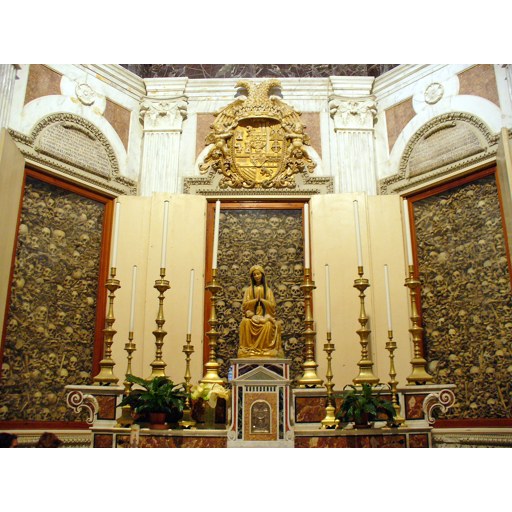
Laurent Massoptier (see website: http://loloieg.free.fr)
License: CC BY 2.0
martyrs of Otranto
Saint- Life Span
- d. 1480
- Feast Day
- 14 August
- Gender
- male
- Church
- Catholic
Places
Roles & Family
Patronage
Otranto
Canonization
Biography
The Martyrs of Otranto were 813 laymen of Otranto, a fortified Adriatic port in the Kingdom of Naples, who according to Catholic tradition were beheaded on 14 August 1480 for refusing to convert to Islam after their city fell to an Ottoman army. In late July 1480 a large Ottoman force under Gedik Ahmed Pasha, sent by Sultan Mehmed II, landed on the Salentine coast of Apulia and invested Otranto. The town’s small garrison and the citizens resisted until 11 August, when the walls were breached and the city was taken. The ensuing sack was extremely violent. Archbishop Stefano Pendinelli and others who had sought refuge in the cathedral were killed, and much of the population was put to the sword or reserved for slavery. The expedition formed part of Mehmed II’s wider design, after the conquest of Constantinople, to gain a lasting foothold in southern Italy.
Traditional accounts, which underlie the later beatification and canonization, relate that the Ottoman commander then offered the remaining adult men their lives if they would embrace Islam. Antonio Primaldo, also known as Antonio Pezzulla, an elderly tailor of the town, is said to have answered for them all that they would not deny Christ. On 14 August the prisoners were led out to the Hill of Minerva, a rise near the city later renamed the Hill of the Martyrs, and were beheaded. Primaldo was struck first; a later legend held that his headless body remained standing until every companion had been executed, and that the executioner, converted by the sight, was put to death in turn. Women and children who survived were enslaved and deported. Contemporary reports confirm a bloody sack and mass killing or captivity, though some historians have pointed out that a formal, collective choice between apostasy and death is more clearly attested in subsequent hagiography than in the very earliest dispatches, and that the figure 813 is that of the received tradition.
The Ottomans held Otranto until 1481, when, after the death of Mehmed II, Neapolitan troops under Alfonso, Duke of Calabria, recovered the city for King Ferdinand I. The remains of the slain men were gathered from the hill and in due course enshrined in Otranto’s cathedral of Santa Maria Annunziata, where a great quantity of bones is still displayed in glass cases behind the high altar. Other relics were later given to churches in Naples, notably Santa Caterina a Formiello, and elsewhere. A local cult of the holy martyrs of Otranto established itself in the late fifteenth and sixteenth centuries, supported by civic and episcopal memory of the sack.
Canonical investigation of their martyrdom was undertaken in the sixteenth century. On 14 December 1771 Pope Clement XIV beatified Antonio Primaldo and his companions, recognizing their immemorial cult. The cause of canonization was reopened in the twentieth and twenty-first centuries. After the approval of a miracle attributed to their intercession, Pope Francis canonized the 813 Martyrs of Otranto on 12 May 2013 in Saint Peter’s Square, the first canonization of his pontificate. Their feast day is 14 August. They are venerated as patron saints of the city of Otranto.