Martyrs of Rochefort is a blessed of the Catholic Church.
The original uploader was Pep.per at French Wikipedia.
License: CC BY-SA 1.0
Martyrs of Rochefort
Blessed- Gender
- male
- Church
- Catholic
Places
Roles & Family
Canonization
Biography
The Martyrs of Rochefort, also called the Martyrs of the Hulks of Rochefort, were sixty-four Catholic priests and religious who died in 1794 and 1795 aboard prison ships in the roadstead of Rochefort, a naval port on the Atlantic coast of France. They belonged to the refractory clergy who refused the oath to the Civil Constitution of the Clergy, the 1790 revolutionary statute that reorganized the Church in France as a civil body, made bishops and pastors subject to election, and ruptured canonical communion with Rome. Pope Pius VI condemned that legislation. Priests who would not swear were stripped of legal standing and, as the Revolution radicalized, marked for internment and deportation. The Rochefort victims were therefore imprisoned as non-juring clergy, not as ordinary political detainees, and the later beatification cause treated their deaths as martyrdom in hatred of the faith.
In 1794, during the Reign of Terror, large numbers of refractory priests were assembled for transportation to French Guiana. A British naval blockade made the ocean voyage impossible, so the prisoners were confined instead on decommissioned hulks in the Charente estuary. The principal vessels were the Deux-Associés and the Washington, former merchant or slave ships used as floating prisons. Hundreds of men were packed below decks with insufficient food, water, clothing, and medicine. Typhus, scurvy, dysentery, and exposure killed more than half of those embarked. Standard historical counts hold that of about 827 clergy sent to the Rochefort pontons, 542 died. The sixty-four later recognized as blesseds are those for whom surviving testimony was judged sufficient to show that they had been held specifically as non-juring priests and had persevered in that refusal until death, rather than dying only from undifferentiated wartime hardship.
The group was not a single religious order. It included diocesan priests from many French dioceses and members of several religious families, among them Capuchins and Recollect Franciscans. Jean-Baptiste Souzy, a priest of the diocese of La Rochelle and a former vicar general, was acknowledged by his companions as superior in captivity; he died on 27 August 1794 and is customarily named first among the blesseds. Under extreme constraint the prisoners tried to keep a common life of prayer and mutual aid. After the Ninth of Thermidor in late July 1794 the most violent phase of the Terror ended, but deaths on the hulks continued into 1795, when remaining clergy were gradually released as government policy toward the Church changed.
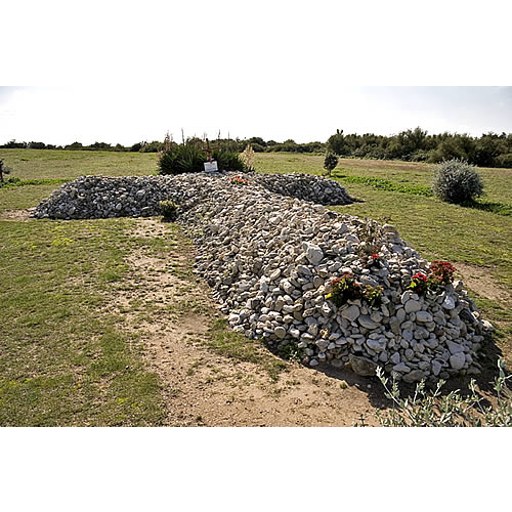
The dead were buried in haste, many in common graves on nearby Île Madame, which later became a place of remembrance, with a cemetery and chapel associated with the deported priests. On 1 October 1995 Pope John Paul II beatified the sixty-four Martyrs of Rochefort in Rome. They have not been canonized. Their memory is kept especially in the dioceses of western France linked to Rochefort and La Rochelle, among the clergy and faithful who commemorate those who resisted the Civil Constitution of the Clergy during the French Revolution.