Mary of Jesus de León y Delgado is a servant of god of the Catholic Church (1643 - 1731). Mary of Jesus de León y Delgado's feast day is celebrated on 15 February.
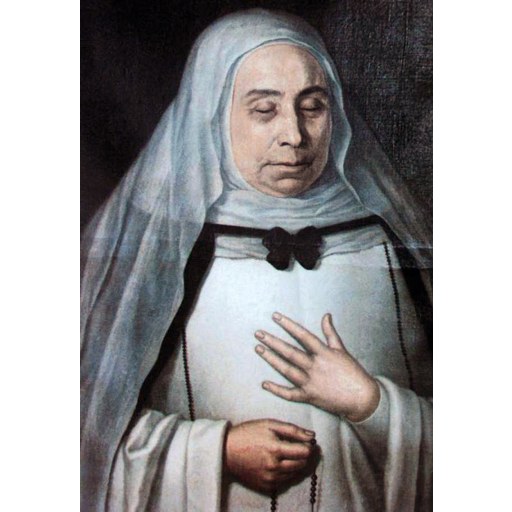
José Rodríguez de la Oliva
License: Public domain
Mary of Jesus de León y Delgado
Servant of God- Life Span
- 1643 - 1731 (age 88)
- Feast Day
- 15 February
- Gender
- female
- Church
- Catholic
Places
Relics & Where to Venerate
Location unknown
The bodily remains of Mary of Jesus de León y Delgado are a first-class relic. Venerated at Monastery Santa Catalina La Laguna.
Location unknown
== Beatification process == De León's incorrupt body is still preserved in the convent of St
Roles & Family
Religious Information
Biography
Mary of Jesus de León y Delgado, known throughout the Canary Islands as La Siervita (the Little Servant), was born in 1643 in El Sauzal on the island of Tenerife, then under the Spanish Crown. She came from a family of modest means; standard biographies name her parents as Andrés de León y Delgado and María del Rosario Bello. From childhood she was described as pious, humble, and inclined to prayer. Household poverty led her into domestic service at a young age. She worked in several Tenerife households before seeking admission to religious life, a path consistent with the limited options open to poor women in the seventeenth-century Canaries.
In 1668 she entered the Dominican monastery of Santa Catalina de Siena in San Cristóbal de La Laguna as a lay sister (hermana lega or conversa), taking the name Mary of Jesus. Lay sisters performed the community’s humblest labor—cooking, cleaning, and serving the choir nuns—while remaining members of the Order of Preachers. She lived in that hidden state for more than sixty years, combining heavy manual work with fasting, penance, and long hours of prayer centered on the Passion and the Eucharist. She never held office and, according to contemporary testimony, consistently refused praise or exemption from ordinary duties.
During her lifetime a reputation for extraordinary phenomena grew around her. Witnesses inside and outside the monastery reported ecstasies, levitation during prayer, and alleged bilocations in which she was said to console the sick and the dying. She was also credited with insight into hidden faults and with unfailing charity toward the poor who came to the convent door. These claims were later gathered in early lives and in depositions for a cause of beatification; they made her a figure of popular veneration on Tenerife well before her death, even as she herself insisted on her unworthiness and sought to remain unnoticed.
She died in the monastery on 15 February 1731. Her body was soon reported incorrupt and has been kept and publicly shown in a glass-sided coffin in the church of Santa Catalina de Siena in La Laguna, where it remains a focus of local pilgrimage. Devotion to La Siervita spread across the Canary Islands and among Canarian communities elsewhere. She has not been beatified or canonized by the Holy See; a cause has been introduced and she is often called Venerable in popular and some ecclesiastical usage. Her memory is kept on 15 February, the anniversary of her death.