Mastridia of Alexandria is a venerable of the Catholic Church. Mastridia of Alexandria's feast day is celebrated on 24 November.
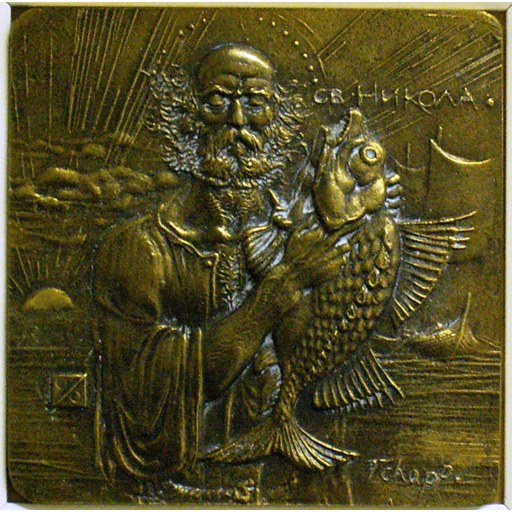
https://en.wikipedia.org/wiki/Icon
License: unknown
Mastridia of Alexandria
Venerable- Feast Day
- 24 November
- Gender
- female
- Church
- Catholic
Places
Roles & Family
Biography
Mastridia of Alexandria is a Christian saint venerated in the Eastern Orthodox Church as a venerable desert ascetic. Almost everything that can be said about her comes from brief notices in Orthodox synaxaria and menologia, especially in the Slavic liturgical tradition, rather than from contemporary historical documents. According to that tradition she lived in Alexandria in Egypt. No reliable source records the year of her birth or of her death, and even the century in which she lived is not established by independent evidence. She was never a bishop, patriarch, or pope, and she is not associated with any named religious order in the later Western sense.
The core of her legend concerns a young man who became infatuated with her and persistently pursued her. In order to escape his attentions and to avoid becoming a cause of temptation or scandal, Mastridia left her home. She took with her a small basket of soaked beans and a vessel of water and withdrew into the wilderness, where she adopted the life of a hermit. The synaxarion account states that she remained in the desert for seventeen years, taking as food a single soaked bean each day and devoting herself to fasting and prayer. Tradition further relates that she overcame demonic assaults by making the sign of the Cross. After these years of solitude she died in the desert. No burial place is recorded.
A closely related story appears in the Spiritual Meadow (Pratum Spirituale) of John Moschus, a work of the early seventh century. In that narrative a woman named Mastridia lived as a recluse in Jerusalem, near the Tower of David. Harassed by a suitor, she likewise took soaked pulse and water and went into the desert of the Jordan, remaining there for many years. Later Orthodox calendars sometimes distinguish Mastridia of Alexandria, commemorated on 24 November, from Mastridia of Jerusalem, sometimes listed on 7 February, while other compilers appear to have transferred or duplicated the same legend. A careful historian cannot determine whether these notices refer to one woman or two, nor can the Alexandrian setting be confirmed independently of the later liturgical texts.
She is remembered as a model of chastity and of flight from the world. Her feast day in the Eastern Orthodox calendar, particularly in the Russian and other Slavic menologia, is 24 November. She has no widely attested patronages. Canonization in her case belongs to the pre-congregational period of local and liturgical veneration; no pope or synod of later centuries is recorded as having formally canonized or beatified her. The historical Mastridia, if she existed as a distinct individual in Alexandria, remains known only through this slender hagiographical tradition.