Matthew Makil is a venerable of the Catholic Church (1851 - 1914).
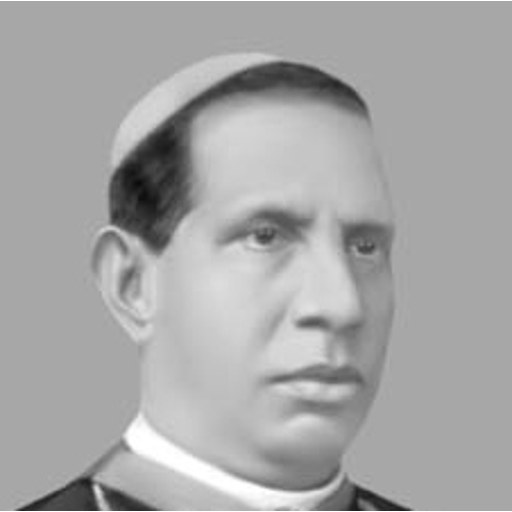
Gregorios
License: Public domain
Matthew Makil
Venerable- Life Span
- 1851 - 1914 (age 63)
- Gender
- male
- Church
- Catholic
Places
Roles & Family
Biography
Mar Mathew Makil was a Syro-Malabar Catholic bishop of the late nineteenth and early twentieth centuries and a principal architect of the modern Knanaya Catholic jurisdiction in Kerala. He was born in 1851 at Manjoor, in the princely state of Travancore in southern India, into a Knanaya (Southist) Catholic family. The Knanaya are an endogamous community among the Saint Thomas Christians who traditionally trace their origin to a fourth-century migration from Mesopotamia associated with Thomas of Cana. Makil received his ecclesiastical training in the seminaries then serving the Syro-Malabar clergy, including the major seminary at Puthenpally, and was ordained a priest in the 1870s. As a young priest he held pastoral charges and served as secretary to Charles Lavigne, the Jesuit Vicar Apostolic of Kottayam, gaining administrative experience at a time when the Holy See was preparing to restore indigenous leadership to the Syro-Malabar faithful after a long period of Latin jurisdiction. While still a priest, in the early 1890s, he founded the Congregation of the Sisters of the Visitation of the Blessed Virgin Mary at Kaipuzha, a community of women religious devoted to education and pastoral work among the Knanaya and the wider Syro-Malabar Church.
In 1896 Pope Leo XIII reorganized the Syro-Malabar missions into three vicariates apostolic—Trichur, Ernakulam, and Changanacherry—and appointed native priests as their first vicars apostolic. Makil was named Titular Bishop of Tralles in Asia and Vicar Apostolic of Changanacherry and was consecrated bishop in October 1896. He thus became one of the first three indigenous bishops of the Syro-Malabar Church in the modern era, alongside John Menachery of Trichur and Louis Pazheparambil of Ernakulam. The Changanacherry vicariate included both the majority Northist Saint Thomas Christians and the minority Knanaya Southists. During some fifteen years there Makil worked to organize diocesan administration, strengthen the clergy, and expand Catholic schooling. His episcopate coincided with a difficult communal question: Knanaya Catholics sought a bishop of their own lineage in order to protect endogamy and distinct customs, while many Northists equally desired a bishop from their community for a mixed vicariate.
Those tensions were addressed in 1911 when Pope Pius X erected a separate Vicariate Apostolic of Kottayam exclusively for the Knanaya Catholics and transferred Makil to it as its first vicar apostolic. Thomas Kurialacherry, a Northist, was appointed to Changanacherry. Kottayam thereby became, and has remained, unusual in the Catholic Church as a jurisdiction defined by an endogamous ethnic community rather than by territory alone. Makil governed the new vicariate only for a short time. He died in 1914 at Kottayam and was succeeded by Alexander Chulaparambil. The see he first headed later became the Syro-Malabar Catholic Archeparchy of Kottayam, still the canonical home of Knanaya Catholics.
Makil is remembered in Syro-Malabar and Knanaya Catholic tradition as a founder-bishop and community leader rather than as a canonized saint. He has not been beatified or canonized by the Holy See, and he is not assigned a universal feast day or official patronages. His historical importance rests on three related achievements: participation in the restoration of a native Syro-Malabar hierarchy in 1896; the institutional beginning of the Kottayam vicariate in 1911; and the consolidation of Knanaya Catholic identity in full communion with Rome at the turn of the twentieth century. Later educational and religious institutions of the archeparchy regard him as their founding father, even where they were established after his death.