Matthew of Agrigento is a blessed of the Catholic Church (d. 1450). Matthew of Agrigento's feast day is celebrated on 7 January.
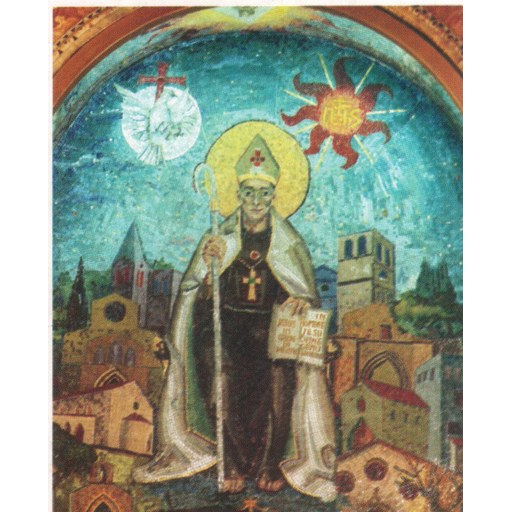
Unknown authorUnknown author
License: Public domain
Matthew of Agrigento
Blessed- Life Span
- d. 1450
- Feast Day
- 7 January
- Gender
- male
- Church
- Catholic
Places
Roles & Family
Religious Information
Canonization
Biography
Matthew of Agrigento, known in Italian as Matteo da Agrigento or Matteo da Gimara and in documentary and later biographical sources as Matteo Guimerà, was a Sicilian Franciscan of the Observant reform and bishop of Agrigento. He was born in Agrigento, in the Kingdom of Sicily, in the later fourteenth century. Later lives commonly assign the year 1376, but a precise contemporary birth record is not available, and that year should be treated as traditional rather than as a documented vital date. His family, called Guimerà or Gimara, is described as of Catalan origin, which accords with the Aragonese political world of late medieval Sicily, then under the Crown of Aragon. In youth he entered the Order of Friars Minor and attached himself to the Observant current, which demanded a stricter following of the Rule of Saint Francis than was then usual in many Conventual houses. He was formed in the religious life and ordained to the priesthood.
In the early fifteenth century he belonged to the same generation of Observant preachers as Bernardine of Siena, John of Capistrano, and James of the Marches. Franciscan and Sicilian tradition presents him as a collaborator and friend of Bernardine and as a promoter of devotion to the Holy Name of Jesus, a hallmark of Observant preaching in that period. Like other Observant itinerants, he preached penance, sought to found or reform convents according to a more austere reading of the Franciscan rule, and addressed both the laity and the clergy. His activity is placed in Sicily and also in other lands of the Crown of Aragon, including Spain. The surviving evidence for each episode of this preaching career is uneven, as is common for Observant biographies of the time, but the later record is consistent in remembering him as an austere religious, an energetic preacher, and a worker for moral and conventual reform.
In 1442 Pope Eugene IV, who favored the Observants, appointed him bishop of Agrigento, returning him to his native city as ordinary. The appointment fits a broader papal policy of using Observant Franciscans as instruments of reform. As bishop he attempted to restore clerical discipline and to correct abuses in the diocese. Those efforts met determined resistance from the cathedral chapter and from portions of the local clergy. The resulting conflict is one of the better-attested features of his life: his episcopate was troubled, and he did not enjoy a long and uncontested government of the see. He withdrew from active administration and resumed the conventual life of the Observance.
He spent his last years at the Observant house of Santa Maria di Gesù in Palermo. He died there on 7 January 1450 and was buried in the convent church. A cult formed around his tomb, with the reports of intercession typical of late medieval Observant holy men. In 1767 Pope Clement XIII confirmed this immemorial cult, the act by which Matthew of Agrigento is recognized as Blessed in the Catholic Church. He was not the subject of a modern canonization process. His feast is kept on 7 January, the date of his death. Veneration has remained primarily local and Franciscan, centered on Sicily, especially Agrigento and Palermo, where he is remembered as a preacher, Observant reformer, and reforming bishop whose career shows both the energy and the limits of fifteenth-century Observant reform.