Mawgan is a saint of the Catholic Church. Mawgan is the patron saint of St Mawgan in Pydar;Mawgan-in-Meneage.
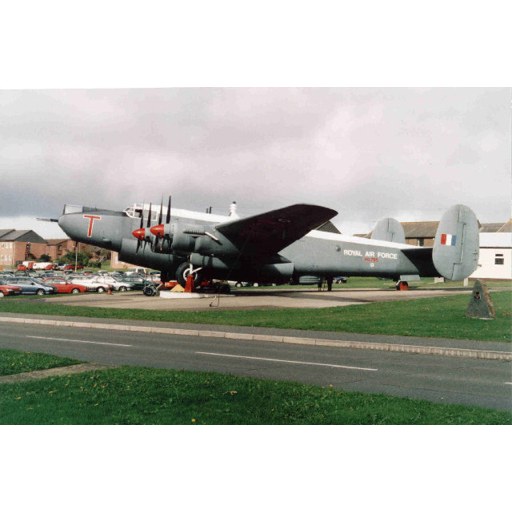
Robin Phillips
License: CC BY-SA 2.0
Mawgan
Saint- Gender
- male
- Church
- Catholic
Places
Roles & Family
Patronage
St Mawgan in Pydar;Mawgan-in-Meneage
Biography
Saint Mawgan, also recorded in Latinizing forms as Mauganus and in vernacular spellings such as Maugan, is an early medieval Celtic saint whose cult is attested in Cornwall. He is conventionally assigned to the fifth or sixth century, the age of the British Church before the Gregorian mission to the Anglo-Saxons, but no contemporary charter, annal, or vita names him, and no verified year of birth or death exists. Knowledge of him rests chiefly on the dedication of two ancient parish churches in Cornwall: the church of St Mawgan in the parish of St Mawgan in Pydar, near the north coast and the later settlement at Mawgan Porth, and the church of St Mawgan in the parish of Mawgan-in-Meneage on the Lizard peninsula. Those dedications show that a cult of Mawgan was already established in Cornwall by the early Middle Ages.
Later antiquaries and hagiographers have often identified Mawgan with the Welsh saint Meugan (also Meugant or Maughan), a figure commemorated in several Welsh churches and whose name is linguistically equivalent. The identification is plausible on onomastic grounds but is not proved by any early source that explicitly equates the two. Other writers have suggested an Irish origin or a connection with Brittany, where similar saint-names occur, yet those links likewise remain conjectural. The Brittonic form of the name is consistent with a Welsh or Cornish milieu. Nothing certain is known of his parentage, place of birth, education, or the circumstances of his death.
He is not recorded as a bishop in any contemporary or near-contemporary document, nor did he hold the office of pope or of patriarch of any Orthodox, Oriental Orthodox, Coptic, or Church of the East see. Whether he lived as a monk, an eremite, or a secular cleric cannot be documented. No spouse or children are named in any reliable source. Local Cornish tradition has associated him with a landing at Mawgan Porth and with the foundation of a religious community, but such stories cannot be traced to early written evidence and belong to later legend rather than to verified biography. No burial place is recorded.
Veneration of Mawgan remained essentially local. He was never the subject of a papal canonization or beatification process of the kind later used by the Roman Church; his cult arose in the Celtic West long before those procedures existed. His memory has been preserved principally in Cornish place-names and in the two parish churches that bear his name. Like many saints of the British migration period, Mawgan is known more as a name attached to sacred sites than as a figure whose life can be reconstructed in detail. The facts that can be stated with confidence are therefore few: he was a male Christian of the early medieval British Church, commemorated in two Cornish parishes, whose biography otherwise lies beyond the reach of verified history.