Max Josef Metzger is a blessed of the Catholic Church (1887 - 1944).
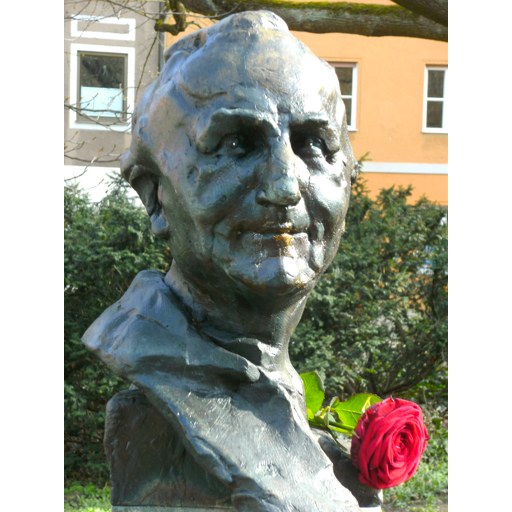
J. M. Ipfelkofer
License: CC BY-SA 3.0
Max Josef Metzger
Blessed- Life Span
- 1887 - 1944 (age 57)
- Gender
- male
- Church
- Catholic
Places
Roles & Family
Biography
Max Josef Metzger was a German Roman Catholic priest, pacifist, and pioneer of ecumenism who was executed by the National Socialist regime. He was born in 1887 in Schopfheim, in the Grand Duchy of Baden. After theological studies he was ordained a priest of the Archdiocese of Freiburg in 1911 and served in parish ministry before the outbreak of the First World War. As a military chaplain he witnessed the slaughter of the war, an experience that turned him into a committed opponent of armed conflict. From that time onward he argued that Christians were obliged to work for international reconciliation and to refuse participation in unjust war.
In the years after 1918 Metzger became one of the leading figures of the Catholic peace movement in German-speaking Europe. He founded the World Peace League of the White Cross and, in 1919, the Peace League of German Catholics, which sought to educate the faithful in the ethics of peace and to support international institutions of arbitration. He later established a community dedicated to Christ the King at Meitingen near Augsburg, combining prayer, social work, and advocacy for peace. Metzger wrote numerous pamphlets and articles, traveled to international congresses, and tried to keep German Catholics in conversation with Protestants and other Christians at a time when official Catholic practice still discouraged such contacts.
His ecumenical work took organized form in the Una Sancta Brotherhood, which he founded in the late 1930s to promote prayer and dialogue for the reunion of the churches. After the National Socialists came to power in 1933, Metzger’s pacifism, his foreign contacts, and his refusal to accept racist ideology made him a target of the Gestapo. He was arrested more than once, and his organizations were suppressed. In 1943 he composed a memorandum setting out ideas for a democratic German constitution after the anticipated fall of Hitler and attempted to have it delivered to Archbishop Erling Eidem of Uppsala in Sweden, hoping that a neutral churchman might preserve the document for the postwar period. The courier was an informant of the secret police.
Metzger was brought before the People’s Court in Berlin, presided over by Roland Freisler, and condemned to death for high treason and for undermining the war effort. He was executed by guillotine at Brandenburg-Görden prison on 17 April 1944. Letters written in his last months show a priest who forgave his accusers, entrusted his community to God, and continued to hope for peace among nations and unity among Christians. After 1945 he was widely remembered in Germany as a Catholic martyr of the Third Reich. His life has been studied as an example of Christian resistance, and the Archdiocese of Freiburg has taken an interest in his cause, though he has not been formally beatified or canonized.