Maximianus of Ravenna is a saint of the Catholic Church (499 - 556). Maximianus of Ravenna's feast day is celebrated on 22 February.
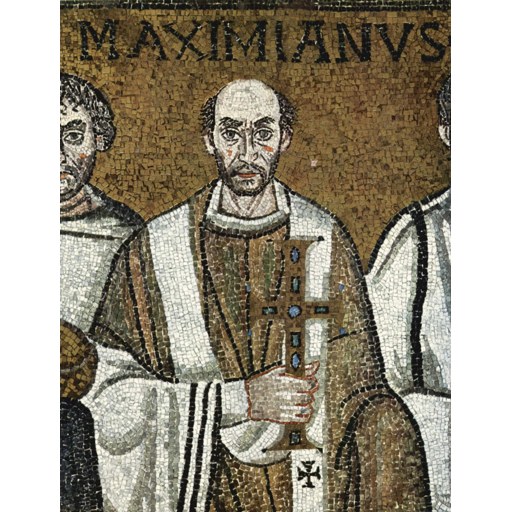
Meister von San Vitale in Ravenna
License: Public domain
Maximianus of Ravenna
Saint- Life Span
- 499 - 556 (age 57)
- Feast Day
- 22 February
- Gender
- male
- Church
- Catholic
Places
Relics & Where to Venerate
Location unknown
The bodily remains of Maximianus of Ravenna are a first-class relic. Venerated at Ravenna Cathedral.
Roles & Family
Biography
Maximianus of Ravenna, also called Maximian, was bishop and archbishop of Ravenna in the mid-sixth century, when the city served as the imperial capital of Byzantine Italy. He was born at Pola (modern Pula) in Istria near the close of the fifth century; later tradition, followed by the Catholic Encyclopedia and standard reference works, places the year at 499. The chief narrative source for his life is the Liber Pontificalis Ecclesiae Ravennatis of Agnellus of Ravenna, written in the ninth century. Agnellus presents him as a man of modest family who entered the clergy of his native city and became a deacon there. Almost nothing else can be verified about his parentage, education, or early career. He is not known to have belonged to a monastic order, and no spouse or children are recorded.
In 546, during the Gothic War, the Emperor Justinian I named this Istrian deacon to the vacant see of Ravenna, passing over the candidate expected by the local clergy and people. Resistance in the city was such that Maximianus was consecrated far from his new church: Pope Vigilius ordained him bishop at Patras in Greece on 14 October 546. Only afterward did he enter Ravenna and obtain recognition. He is generally regarded as the first prelate of Ravenna to bear the title of archbishop and to exercise a clearly metropolitan authority, a dignity bound up with Justinian’s policy of strengthening the imperial church in Italy. Throughout his episcopate he remained a loyal supporter of the emperor’s religious program, including the condemnation of the Three Chapters, which aligned Ravenna with Constantinople at a time when much of the Italian episcopate opposed that policy.
Maximianus is remembered above all as a builder and patron of sacred art. He completed and decorated the church of San Vitale, whose mosaics include the celebrated panel of Justinian and his court in which the bishop himself appears, the only figure identified by name. On 9 May 549 he consecrated the basilica of Sant'Apollinare in Classe. He also founded or restored churches dedicated to Saint Stephen and to Saint Andrew the Apostle, the latter near the episcopal residence, and he is associated with the ivory cathedra known as the Throne of Maximian, a masterpiece of sixth-century carving probably produced in an imperial workshop and intended to proclaim the dignity of the Ravennate see. He gathered relics and promoted the cult of Saint Apollinaris, whom local tradition claimed as the city’s founding bishop and a disciple of Saint Peter, thereby asserting the apostolic prestige of his church. Agnellus describes him as tall and lean, energetic in administration, and zealous in collecting books as well as sacred objects.
He died in Ravenna on 22 February 556, though some authorities give 557, and was buried in the church of Saint Andrew that he had built. Later generations venerated him as a saint; his feast is observed on 22 February. No formal papal act of canonization is recorded, as is typical for late antique bishops whose cult grew from local memory. The historical Maximianus remains visible chiefly through the churches he finished, the ivory throne linked with his name, the San Vitale portrait, and the later, partly legendary account of Agnellus. Read with caution, those sources show a prelate who used imperial favor to raise the rank of his see and to clothe Ravenna in the art and liturgy of Justinian’s empire.