Maximinus of Besançon is a saint of the Catholic Church.
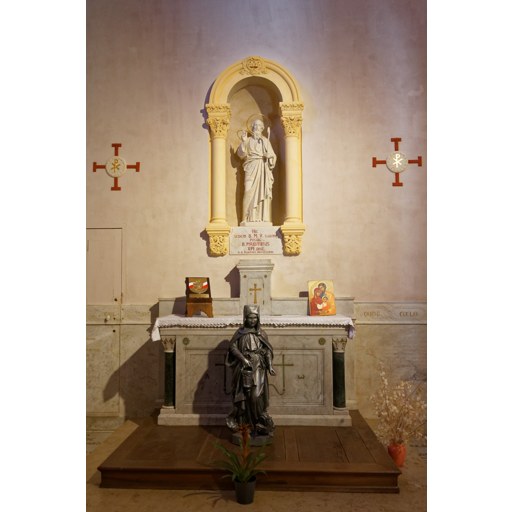
Bjs
License: CC BY-SA 4.0
Maximinus of Besançon
Saint- Gender
- male
- Church
- Catholic
Places
Roles & Family
Biography
Maximinus of Besançon is an obscure figure associated with the early Christian community of Vesontio, the Roman city that became Besançon in eastern Gaul (present-day Franche-Comté, France). He is known primarily through later medieval traditions that appear to identify him as a bishop of the local see, although no contemporary documents confirm his existence, dates, or deeds. Reliable historical sources for the first bishops of Besançon are extremely limited; the earliest securely attested prelates belong to the fifth century and later, and even those are known from fragmentary references rather than full biographies.
The city of Vesontio was an important administrative and military center of the Sequani in the Roman province of Gallia Belgica and later Maxima Sequanorum. Christianity reached the region during the later Empire, most likely through contacts with the well-established church of Lyon, whose bishop Irenaeus in the late second century already oversaw a network of communities in Gaul. Hagiographical legend later credited the brothers Ferreolus and Ferrutio with the first preaching at Besançon, an account that cannot be verified historically but reflects the memory of an early mission. By the fourth and fifth centuries an organized episcopal church existed, participating in the wider Gallic ecclesiastical structure. Any historical Maximinus would have lived and worked in this environment of late-antique transition, when bishops increasingly assumed civic as well as religious responsibilities amid political instability.
No inscription, conciliar act, or letter from late antiquity names a Maximinus as bishop of Besançon. He does not appear among the signatories of the councils of Arles (314), Turin (c. 398–401), or the fifth-century Gallic synods whose records survive. Later episcopal catalogues, compiled in the Middle Ages and often containing legendary or duplicated names, are the probable source of his inclusion in some lists of local saints and bishops. Such catalogues frequently mixed authentic office-holders with pious inventions or transferred names from other sees. Consequently, modern historians cannot determine whether Maximinus represents a genuine but otherwise unrecorded pastor of the fourth or fifth century, a doublet of another saint, or a purely traditional figure.
Local cults of early bishops were common in Gaul and often centered on tombs, churches, or feast days that developed organically before being recorded in martyrologies. Better-documented Besançon saints, such as the martyr-bishop Antidius (traditionally placed in the early fifth century), show how the diocese constructed a sacred past. In the absence of independent medieval evidence for a feast, relics, or a dedicated sanctuary of Maximinus, his veneration—if it existed—must have remained modest and localized. Critical hagiography therefore treats him as a name attached to the early history of the church of Besançon rather than as a personality whose life can be reconstructed. The persistence of such figures in diocesan memory nevertheless attests to the importance the medieval church placed on demonstrating apostolic or at least antique origins for its sees.