Maximus is a saint of the Catholic Church.
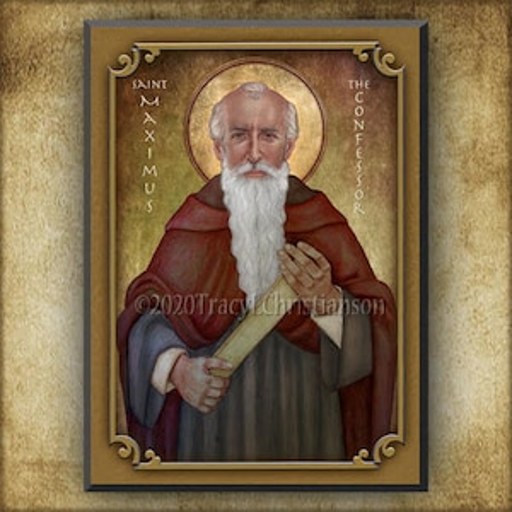
https://etsy.com/market/icon_of_st_maximus
License: unknown
Maximus
Saint- Gender
- male
- Church
- Catholic
Biography
Maximus is a Latin personal name meaning greatest, widely used in the Roman world and later borne by many Christian bishops, monks, martyrs, and theologians. The present subject is identified only by that name, with no Wikidata identifier, encyclopedia article, see, epithet, or century attached. In hagiography and church history that is not enough to isolate one person. Assigning a birth year, death year, city, office, feast day, or patronage would mean choosing among several well-attested but distinct men, which would be guesswork rather than verification.
Among figures commonly treated in reliable historical and liturgical sources are Maximus the Confessor, a seventh-century monk and theologian associated with Constantinople and North Africa, remembered for opposition to monothelitism and for dying in exile after mutilation; Maximus of Turin, a fifth-century bishop whose Latin homilies survive and who is a principal witness to pastoral life in northern Italy in late antiquity; and various martyrs of the imperial persecutions whose brief notices appear in early martyrologies, often with little more than a name, a place of suffering, and a feast. The patriarchal lists of Constantinople also include men named Maximus. These lives belong to different centuries, regions, and states of life: some were monks, some diocesan bishops, some lay or clerical martyrs. Their cults, burial places, and later patronages do not coincide.
Martyrological tradition compounds the difficulty. Western and Eastern calendars record multiple saints called Maximus, sometimes on neighbouring days, sometimes with overlapping legendary passiones that later compilers may have conflated. A feast day or a patronage attached to one Maximus cannot safely be transferred to another. Likewise, no Bishop of Rome is securely known under this name, but several eastern hierarchs were; without a specified see it is impossible to mark papal or patriarchal office as yes or no for this record. Marital status and children are equally unverifiable in the aggregate: some Maximuses were monks or otherwise committed to celibacy, while the sources are silent for others.
Because none of the usual biographical coordinates can be tied to a single, named individual from the information given, the dated and placed fields in this entry are left blank, as are religious order, spouse, canonization or beatification agents, and the list of patronages. What can be stated with confidence is only onomastic and generic: Maximus is a masculine name in the Latin and Greek Christian onomastic tradition, and it belongs to a large family of late antique and medieval holy men whose individual dossiers must be kept separate. A more precise designation—an epithet such as the Confessor, a city such as Turin, a patriarchate, or a stable feast—would be required before a full, source-based life could be written.