Maximus of Mainz is a saint of the Eastern Orthodox Church (d. 378). Maximus of Mainz's feast day is celebrated on 18 November.
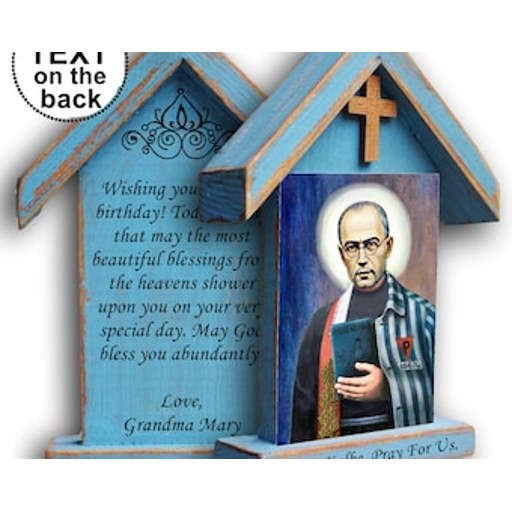
https://etsy.com/listing/1095211134/st-maximus-the-greek-icon-saint-maximos
License: unknown
Maximus of Mainz
Saint- Life Span
- d. 378
- Feast Day
- 18 November
- Gender
- male
- Church
- Eastern Orthodox
Places
Roles & Family
Biography
Maximus of Mainz is a Christian saint traditionally identified as a bishop of the see of Mainz (Latin Mogontiacum) in the fourth century. Mainz was then a major Roman military and civilian centre on the middle Rhine, in the province of Germania Superior. Medieval catalogues of the bishops of Mainz place Maximus in that succession and commonly date his episcopate from 354 until 378. No contemporary inscription, letter, or chronicle records his birth, parentage, or early life, and no reliable source supplies a year or place of birth. Modern historical criticism therefore treats the earliest segments of the Mainz bishop-list with reserve: they were assembled in the Middle Ages in order to demonstrate the antiquity of the church and they mix legendary apostolic founders with names that may preserve a genuine local memory. Within that tradition Maximus is remembered as a bishop and as a saint; beyond the traditional dates of office, the documentary basis for a detailed biography does not exist.
The fourth century was marked by the Arian controversy, which split the episcopate of the Roman Empire and drew repeated intervention from the imperial court, especially under Constantius II. Later hagiographical notices sometimes present Maximus as a defender of Nicene orthodoxy who suffered from Arian pressure. Those notices are late, and the principal fourth-century ecclesiastical historians and controversialists do not mention a bishop of Mainz by this name. It is therefore not possible to reconstruct his theological stance, his participation in synods, or any period of exile on the basis of sources that can be independently verified. His death is traditionally assigned to the year 378, coinciding with the end of the tenure given him in the medieval catalogues, and is usually located at Mainz. No contemporary obituary, burial inscription, or reliable account of his last years has survived, and the site of his grave is unknown.
Christianity is attested in the Rhineland in the fourth century by both literary references and archaeological remains, and the existence of a bishopric at so important a city as Mogontiacum is historically plausible even if the names and exact dates of its first bishops remain uncertain. The later medieval writers of Mainz, like those of other Rhenish and Gallic churches, constructed a continuous succession of bishops reaching back toward apostolic times. Maximus was incorporated into that succession and thereby into the liturgical memory of the diocese. He is commemorated on 18 November in diocesan and some martyrological calendars. Like the great majority of saints of late antiquity, he was not the object of a formal papal canonization of the type that developed in the later Middle Ages; his cult belongs to the pre-congregation period, in which sanctity was acknowledged by popular veneration and local episcopal approval.
No religious order claims Maximus as a member, and there is no historical evidence that he was a monk. Nothing is known of any marriage or children. He did not hold the see of Rome or any of the patriarchal thrones of the East. Major hagiographical repertoires do not attach to him a distinctive list of patronages of places, professions, illnesses, or social groups, apart from his place in the traditional memory of the Church of Mainz. For the historian, Maximus of Mainz remains an obscure figure: a name preserved by medieval episcopal tradition, honoured as a saint on 18 November, and associated with the mid-fourth-century Rhineland, but not a person whose life can be narrated from contemporary, verifiable records.