Maximus of Nola is a saint of the Catholic Church (d. 250). Maximus of Nola's feast day is celebrated on 15 January.
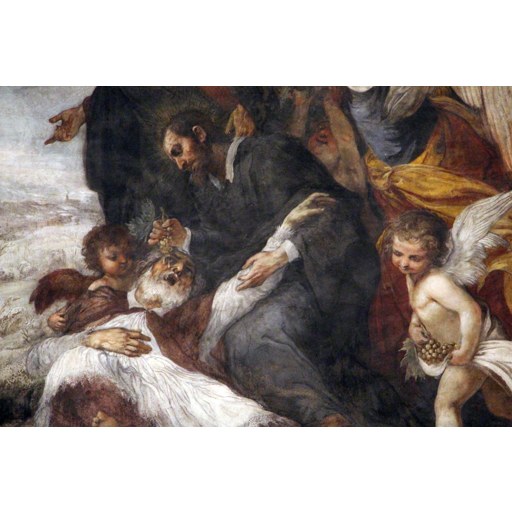
Sailko
License: CC BY 3.0
Maximus of Nola
Saint- Life Span
- d. 250
- Feast Day
- 15 January
- Gender
- male
- Church
- Catholic
Places
Roles & Family
Biography
Maximus of Nola was bishop of Nola, a town in Campania in southern Italy, in the middle of the third century. Almost nothing is known of his birth, family, or early life; the surviving tradition begins with his episcopate and with the crisis that overtook the Christian community of Nola during an imperial persecution. The principal witness is Paulinus of Nola, who in the late fourth and early fifth centuries composed a series of natalicia, or anniversary poems, in honor of Saint Felix of Nola. In those poems Paulinus transmitted the local story of Maximus as an aged and physically frail bishop who led the church of Nola when persecution struck. Later hagiographical writers identified that persecution with the edicts of the emperor Decius around 250, which required sacrifice to the Roman gods and produced confessors and martyrs across the empire. No contemporary document from Maximus’s own lifetime survives, so the outline of his career rests on this later Campanian tradition rather than on independent third-century evidence.
According to the account preserved by Paulinus, when the persecution broke out Maximus withdrew from the city into the wilderness of the neighboring mountains in order to escape arrest. His flight left the local church without its bishop at a moment of acute danger. Felix, a priest of Nola whose father had come from the East and settled in Campania, remained in the town, was seized by the authorities, and was imprisoned and tortured. Paulinus recounts that Felix was miraculously delivered from prison—by an angel, or in some tellings by a nocturnal appearance of Christ—and was commanded to seek out the missing bishop. He found Maximus in a remote and deserted place, collapsed from hunger, thirst, and exposure, and close to death. Felix revived him, in some versions of the legend by means of a cluster of grapes that appeared providentially in the barren landscape, and then brought him back toward safety.
After the intensity of the persecution subsided, Maximus was able to resume his duties as bishop of Nola for a time. He died not long afterward of natural causes rather than by execution, and was remembered as a confessor who had endured exile and hardship for the faith. Upon his death the people of Nola are said to have desired Felix as his successor, but Felix refused the episcopal office and another cleric was chosen in his place. Felix continued to serve as a priest and became the focus of an enduring local cult, which Paulinus later promoted through building works at Nola and through his verse. Maximus himself remained a secondary figure in that cult, known chiefly as the bishop whom Felix had rescued and as Felix’s predecessor in the see.
The historical Maximus is therefore an obscure person. Paulinus wrote more than a century and a half after the events he describes and was composing panegyric of Felix, not a critical biography of the bishop. Modern historians treat the details of the flight, the miraculous deliverance, and the grapes as hagiographical tradition rather than as independently verified chronicle. Even the identification of the persecution with Decius, though conventional in later martyrologies, is an inference rather than a fact stated by Paulinus. Nonetheless, the Latin Church accepted the outline of a third-century bishop of Nola who went into hiding during persecution and who was aided by the priest Felix. Maximus is commemorated as a saint and bishop; his feast has been observed on 15 January. He was not the subject of a formal papal canonization of the later medieval or modern type, but was recognized by popular cult and liturgical commemoration in the manner typical of early Christian confessors of Campania.