Mikhail Chelʹt︠s︡ov is a saint of the Eastern Orthodox Church (1870 - 1931). Mikhail Chelʹt︠s︡ov's feast day is celebrated on January 7.
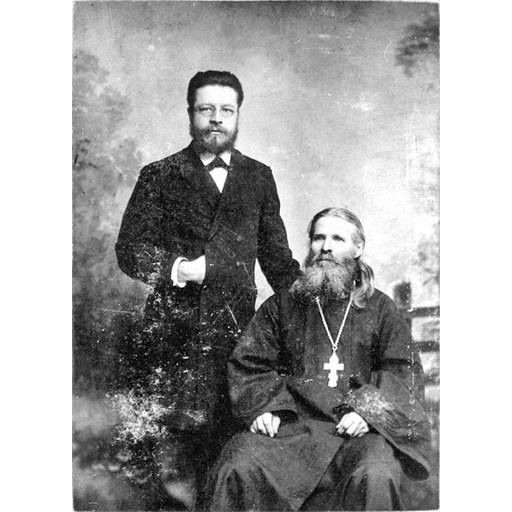
Unknown authorUnknown author
License: Public domain
Mikhail Chelʹt︠s︡ov
Saint- Life Span
- 1870 - 1931 (age 61)
- Feast Day
- January 7
- Gender
- male
- Church
- Eastern Orthodox
Places
Roles & Family
Canonization
Biography
Mikhail Pavlovich Cheltsov was born on 8 January 1870 in the village of Kibol in the Suzdal district of Vladimir Governorate, in the Russian Empire, into the family of a church psalmist. He received a clerical education typical of the Orthodox spiritual estate in late imperial Russia, studying at the Vladimir Theological Seminary and then at the Moscow Theological Academy, from which he graduated in 1894 with the degree of candidate of theology. He taught in theological seminaries, including the Ufa Theological Seminary, and was ordained to the priesthood in the Russian Orthodox Church. He belonged to the married (white) clergy and was later elevated to the rank of protoiereus, or archpriest. In the early twentieth century he settled in Saint Petersburg, where he combined parish and institutional pastoral work with preaching, catechesis, and writing for church periodicals on pastoral theology, apologetics, and the public role of the Church.
The revolutions of 1917 and the Bolshevik assault on religious institutions transformed his ministry. In 1922, during the state campaign to confiscate church valuables under the pretext of famine relief, Cheltsov was among the clergy drawn into the Petrograd trial associated with Metropolitan Veniamin (Kazansky). He was condemned to death; the sentence was later commuted and he was imprisoned. From that ordeal he wrote the memoir commonly known as Recollections of a Man Condemned to Death, a rare first-person account by a priest awaiting execution in the early Soviet period. After his release he returned to pastoral service in Leningrad and remained with the patriarchal Church rather than the renovationist schism favored by the authorities in the 1920s. He continued to serve under surveillance as repression of the clergy intensified.
In 1930 he was arrested again by the OGPU and accused of counter-revolutionary activity. A troika sentenced him to death. He was shot on 7 January 1931 in Leningrad, on the day when the Russian Orthodox Church celebrates the Nativity of Christ according to the Julian calendar. The place of his burial is not known and is presumed to have been an unmarked mass grave, as was common for those executed in that period.
The Holy Synod of the Russian Orthodox Church glorified him as a hieromartyr in 2005 and included him in the Synaxis of the New Martyrs and Confessors of Russia. He is commemorated on 7 January, the anniversary of his death, and together with that synaxis. His prison memoir remains the principal literary testimony attached to his name. Beyond the outline of his education, pastoral rank, the 1922 trial, later arrest, and execution, many details of his parish assignments and family life are only sparsely or inconsistently recorded in published historical and hagiographical accounts.