Mitrofan is a saint of the Eastern Orthodox Church (1623 - 1703). Mitrofan's feast day is celebrated on 23 November and 7 August. Mitrofan is the patron saint of Voronezh.
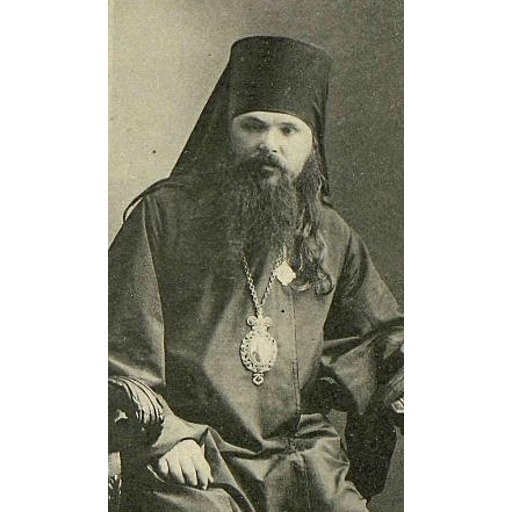
Karl Fischer
License: Public domain
Mitrofan
Saint- Life Span
- 1623 - 1703 (age 80)
- Feast Day
- 23 November and 7 August
- Gender
- male
- Church
- Eastern Orthodox
Places
Roles & Family
Patronage
Voronezh
Canonization
Biography
Saint Mitrofan, first bishop of Voronezh, was born in 1623 in the village of Antilokhovo in the Vladimir lands of the Tsardom of Russia, into the family of a parish priest. In baptism he received the name Mikhail. He was raised in the traditional Orthodox piety of seventeenth-century rural Russia. In adulthood he married and was ordained to the priesthood, serving as a married parish clergyman. He and his wife had a son named Ivan. After his wife’s death, when he was about forty years of age, he entered the Zolotnikov Dormition Hermitage and received the monastic tonsure with the name Mitrofan.
His monastic life and practical ability led to his appointment as abbot of the Kosmin Dormition Monastery on the Yakhroma River and later of the Makaryev Monastery on the Unzha, where he spent about a decade restoring the community, maintaining discipline, and aiding the local population. In 1682 a Moscow church council under Tsar Feodor III created a new diocese centered on Voronezh. Mitrofan was chosen as its first bishop and was consecrated by Patriarch Joachim. He organized parish life in a southern frontier region marked by earlier unrest and by the Old Believer schism, built the stone Annunciation Cathedral, founded a school for clergy, and showed particular care for the poor and for prisoners.
His later years coincided with Peter I’s use of Voronezh as a shipbuilding base for campaigns against Ottoman Azov. Mitrofan supported the fleet as a defense of the Orthodox realm and contributed diocesan resources to the work, while remaining a conservative guardian of church custom. Traditional accounts in his Life relate that he refused to enter the tsar’s Voronezh residence because it contained statues of pagan deities, after which the images were removed. He died on 23 November 1703 and was buried in the Annunciation Cathedral.
In 1831 his tomb was opened and the relics were found incorrupt. He was glorified as a saint by the Russian Orthodox Church in 1832. He is commemorated on 23 November (the day of his repose) and 7 August (the uncovering of the relics) and is venerated as a wonderworker and as the heavenly patron of Voronezh.