Modestinus, Florentinus and Flavianus is a saint of the Catholic Church. Modestinus, Florentinus and Flavianus's feast day is celebrated on 14 February. Modestinus, Florentinus and Flavianus is the patron saint of Avellino;Roman Catholic Diocese of Avellino.
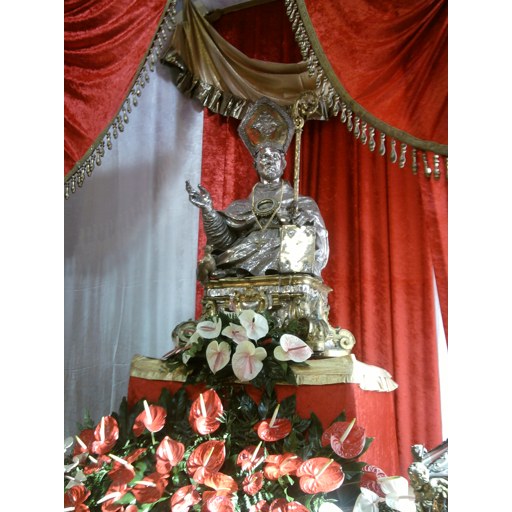
Principe88
License: Public domain
Modestinus, Florentinus and Flavianus
Saint- Feast Day
- 14 February
- Gender
- male
- Church
- Catholic
Places
Roles & Family
Patronage
Avellino;Roman Catholic Diocese of Avellino
Biography
Modestinus, Florentinus and Flavianus, known in Italian as Modestino, Fiorentino and Flaviano, are three martyrs of the early Christian period who are venerated jointly in the Roman Catholic Church. Their cult is concentrated in Campania, above all in the city of Avellino and in its diocese, of which they are the principal patron saints. In the traditional accounts Modestinus is a bishop, Florentinus a deacon and Flavianus a lector. No contemporary chronicle or inscription confirms their biographies. What is known of them comes from later hagiographic texts and from the medieval and modern liturgical life of Avellino and the surrounding Irpinian countryside.
According to the legend that took shape around their cult, Modestinus held an episcopal see in the East, often identified as Antioch in Pisidia in Asia Minor. During a persecution of Christians under the Tetrarchy, the stories variously associate the danger with Diocletian or with Maximinus Daia. Modestinus is said to have left the East together with Florentinus and Flavianus. The three reached Italy by sea, landing at Puteoli (modern Pozzuoli) on the Bay of Naples, and then moved through Campania, preaching and seeking a place of safety. Later retellings associate them with Nola and other centres of early Christianity in the region before they withdrew into the hills above the valley of Avellino.
The passion narrative places their final refuge near a spring in a wooded spot in the territory of present-day Mercogliano, remembered as ad Fontem or by similar names. There they were found and killed for refusing to abandon the Christian faith. The tradition dates the martyrdom to the early fourth century, sometimes specifying the year 311, though that date cannot be verified from independent historical evidence. Their bodies were first buried at or near the place of death. In the Middle Ages the relics associated with the three saints were translated to Avellino and eventually enshrined in the cathedral, the present Cattedrale di Santa Maria Assunta, where they remain the object of public veneration.
The Roman Martyrology commemorates them on 14 February in connection with Avellino, and that date is their principal feast in the city and diocese. They are patrons of Avellino and of the Diocese of Avellino. Processions, civic celebrations and the display of the relics have long marked their feast in local religious life. Because the written passio is late and legendary in character, modern historians regard the Eastern origin, the exact ecclesiastical ranks and the precise circumstances of death as unproven. The historical core that can be affirmed is the antiquity and continuity of their joint cult in Irpinia and their established role as protectors of Avellino.