Montserrat Grases is a venerable of the Catholic Church (1941 - 1959).
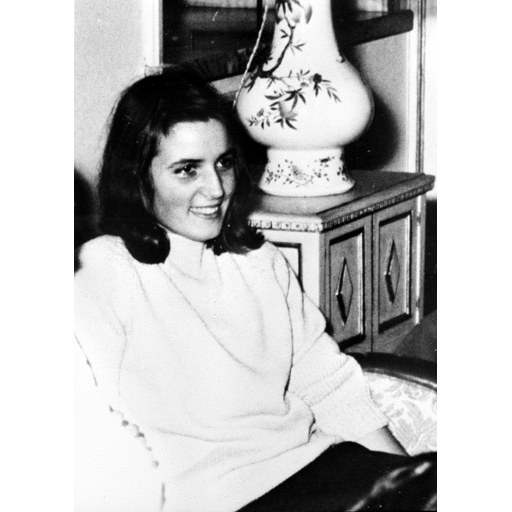
Archivo Fotográfico de la Oficina de Información del Opus Dei en Internet
License: CC BY-SA 2.0
Montserrat Grases
Venerable- Life Span
- 1941 - 1959 (age 18)
- Gender
- female
- Church
- Catholic
Places
Roles & Family
Religious Information
Biography
María Montserrat Grases García, known familiarly as Montse, was born on 27 July 1941 in Barcelona, in Catalonia, Spain. She was the daughter of Manuel Grases and Manolita García and grew up in a large, practicing Catholic family in the years following the Spanish Civil War. From an early age she received a Christian education at home and in school. Contemporaries remembered her as an ordinary, outgoing adolescent: she enjoyed sports, especially basketball, as well as music, dancing, and outdoor excursions in the Catalan countryside. She was a student in Barcelona and, like many of her peers, combined studies with a lively social life among friends and siblings.
In her mid-teens she came into contact with the formative activities of Opus Dei, the personal prelature founded by Josemaría Escrivá. In 1957 she asked to be admitted as a numerary member, thereby committing herself to apostolic celibacy and to seeking holiness in the midst of ordinary professional and family circumstances. She continued to live with her parents and to attend school while taking part in the means of spiritual formation offered by Opus Dei: prayer, frequent reception of the sacraments, and the effort to sanctify study and daily work. Those who knew her in this period described a young woman of natural cheerfulness who tried to live her faith without ostentation.
In the summer of 1958 Montserrat began to suffer persistent pain in her left leg. Medical examination led to a diagnosis of Ewing’s sarcoma, an aggressive malignant tumor of the bone. She underwent radiotherapy and other treatments then available, but the illness advanced. During the months of her sickness she remained at home in Barcelona, cared for by her family. Witnesses later testified that she accepted the pain and the prospect of an early death with remarkable serenity and even humor, offering her sufferings and showing concern for the fatigue of those around her rather than dwelling on her own condition. She continued, as far as her strength allowed, the practices of Christian piety she had learned.
Montserrat Grases died in Barcelona on 26 March 1959, which that year was Holy Thursday, at the age of seventeen. Almost immediately a reputation for holiness spread among those who had known her. The Archbishop of Barcelona opened a diocesan inquiry into her life and virtues; the process in the diocese took place in the 1960s. After the preparation of the Positio, the Congregation for the Causes of Saints examined the documentation. On 26 April 2016 Pope Francis authorized the promulgation of a decree recognizing that she had practiced the theological and cardinal virtues to a heroic degree, and she received the title of Venerable. She has not been beatified or canonized. Her life is presented in Catholic and Opus Dei sources as an example of youthful holiness in ordinary circumstances, particularly the sanctification of illness and of student life in mid-twentieth-century urban Barcelona.