Morwenna is a saint of the Catholic Church. Morwenna's feast day is celebrated on 5 July. Morwenna is the patron saint of Morwenstow.
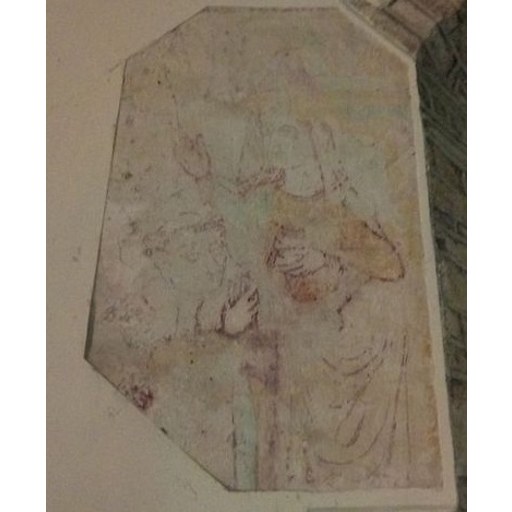
Zac Allan
License: CC0
Morwenna
Saint- Feast Day
- 5 July
- Gender
- female
- Church
- Catholic
Places
Roles & Family
Patronage
Morwenstow
Biography
Saint Morwenna is an early medieval Cornish saint whose life is known almost entirely from later tradition, place-name evidence, and local legend rather than from contemporary documents. She is the patron saint of Morwenstow, a remote parish on the north coast of Cornwall near the Devon border. The parish church there, dramatically sited on the cliffs above the Atlantic, is dedicated jointly to Saint Morwenna and Saint John the Baptist. As with many saints of the Celtic west, virtually nothing about her can be established from sources written in her own lifetime; her story was shaped in the medieval period from oral tradition and from the need to explain a local church dedication and associated holy sites.
Hagiographical tradition, especially as found in the medieval Life of Saint Nectan and in Welsh and Cornish genealogies of the children of Brychan, identifies Morwenna as one of the numerous daughters of Brychan, the semi-legendary fifth-century king of Brycheiniog in south Wales. These accounts present Brychan as the father of a large family of missionary saints who evangelized parts of Wales, Cornwall, and Brittany. Morwenna is therefore often named as a sister of Saint Nectan of Hartland and of other local holy women and men. According to this tradition she left Wales, crossed into the south-west peninsula, and established a hermitage or small oratory at the place that came to bear her name. Morwenstow is generally understood to mean Morwenna’s holy place, or a closely related Cornish formation.
Local legend at Morwenstow recounts that the saint carried heavy stones upon her head from the beach far below the cliffs in order to build her church. When she paused to rest and set down one especially large stone, a spring of fresh water is said to have burst forth; this became known as Morwenna’s Well and remained a focus of local devotion. The existing church building, whose fabric ranges from the Norman period through later medieval work, occupies a clifftop site that almost certainly had Christian use long before the present structure. The dedication itself, together with the place-name, constitutes the principal evidence for her cult.
No dates of birth or death have been preserved, and even the century of her life remains a conventional attribution to the fifth or sixth century. Her cult was essentially local. She is commemorated on 5 July in calendars of Cornish and Celtic saints. Like the great majority of early saints of the Celtic churches, she was never the subject of a formal papal canonization of the later medieval or modern type; her recognition as a saint rests on ancient popular and liturgical veneration in her own district. Later antiquaries and the nineteenth-century vicar of Morwenstow, Robert Stephen Hawker, helped keep her memory alive in print and in the restored furnishings of the parish church.