Mother Eliswa Vakayil is a blessed of the Catholic Church (1831 - 1913).
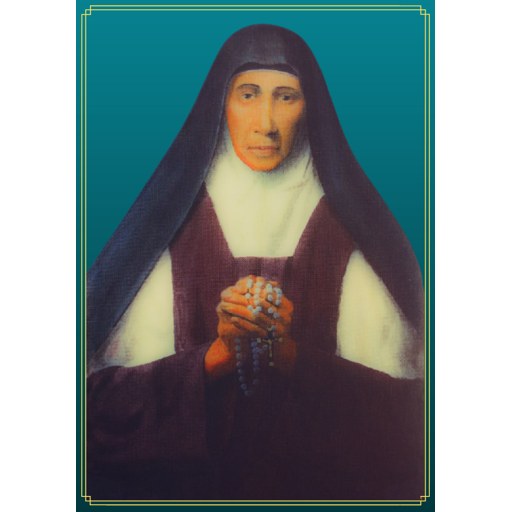
Friendswithsaints
License: CC BY-SA 4.0
Mother Eliswa Vakayil
Blessed- Life Span
- 1831 - 1913 (age 82)
- Gender
- female
- Church
- Catholic
Places
Relics & Where to Venerate
Location unknown
The bodily remains of Mother Eliswa Vakayil are a first-class relic. Venerated at Varappuzha.
Roles & Family
Religious Information
Biography
Mother Eliswa Vakayil, in religion Eliswa of the Blessed Virgin Mary, was born on 15 October 1831 at Ochanthuruth on Vypin Island in the Kingdom of Cochin, in what is now Kerala, India. She was the daughter of Thomman and Thanda and belonged to a Latin Catholic family under the Vicariate Apostolic of Verapoly. In her mid-teens she married Vareed Vakayil; the couple had one daughter, Anna. After only a few years of marriage her husband died, leaving her a young widow. She thereafter devoted herself to prayer, the upbringing of her child, and works of charity, living in a way that already pointed toward a religious vocation rather than a second marriage, which would have been the ordinary social expectation for a widow of her age and standing.
In the 1860s, under the spiritual direction of the Italian Discalced Carmelite missionary Leopold Beccaro and with the approval of Bernardine Baccinelli, Vicar Apostolic of Verapoly, she took steps to form a community of women religious. On 13 February 1866 she, her daughter Anna, her sister Thresia, and a companion began common life in a simple bamboo-mat house at Koonammavu. That foundation is regarded as the origin of the Congregation of the Teresian Carmelites, the first indigenous congregation of women religious in Kerala and the first Carmelite congregation for women founded in India. The sisters followed Carmelite spirituality and soon undertook the education of girls and the care of orphans, at a time when formal schooling for women was still rare on the Malabar Coast. Eliswa thus stands at the beginning of organized indigenous women’s religious life and Catholic girls’ education in the region.
The early community at Koonammavu included members of both the Latin and Syro-Malabar traditions, reflecting the mixed jurisdiction of the Carmelite vicariate. After separate Syro-Malabar vicariates were erected in the late nineteenth century, the community was divided along ritual lines: Latin sisters remained in what became the Congregation of the Teresian Carmelites, while Syro-Malabar sisters formed the Congregation of the Mother of Carmel. Eliswa continued her life as a Teresian Carmelite at Koonammavu, serving as superior and forming younger sisters in a hidden contemplative-apostolic style. She was remembered for humility, patience amid the difficulties that attended the young foundation, and fidelity to Carmelite prayer and the education of girls.
She died on 18 July 1913 at St. Joseph’s Convent, Koonammavu, and was buried there; her tomb remains a place of local devotion. The Congregation of the Teresian Carmelites grew in the twentieth century and received pontifical recognition. The cause for her canonization was opened in the Archdiocese of Verapoly, and she was declared a Servant of God in 2008. In November 2023 Pope Francis recognized her heroic virtues, conferring the title Venerable. She has not been beatified or canonized. Her historical importance lies in opening a path for indigenous women religious in Kerala and in pioneering Catholic education for girls in the later nineteenth century.