Nicetus is a saint of the Catholic Church (d. 573). Nicetus's feast day is celebrated on 2 April.
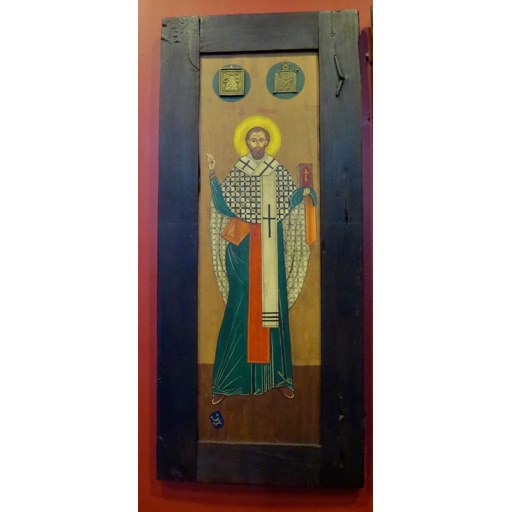
https://www.iconpainting.com/saint-nicolas-16th-century-icon-painting
License: unknown
Nicetus
Saint- Life Span
- d. 573
- Feast Day
- 2 April
- Gender
- male
- Church
- Catholic
Places
Roles & Family
Biography
Saint Nicetus (also Nicetius or, in French tradition, Nizier) was a sixth-century bishop of Lyon in Gaul, known from contemporary testimony rather than from later legend alone. He came of a Gallo-Roman senatorial family in the Burgundian lands. His uncle Sacerdos was bishop of Lyon; his mother is named Artemia in the family tradition preserved by Gregory of Tours, who was Nicetus’s great-nephew and the principal narrative source for his life. No reliable source records a precise birthplace or an exact year of birth. Nicetus entered the clergy and, when Sacerdos was dying about 552, was recommended by his uncle to King Childebert I as successor to the see of Lyon. The king accepted the nomination, and Nicetus was consecrated bishop, beginning an episcopate of some two decades.
Gregory of Tours portrays him as an austere, charitable, and disciplinarian pastor in a period of Merovingian partition, aristocratic violence, and recurrent epidemic. He is described as defending the rights and morals of the Church against powerful laymen, including the excommunication of a count for persistent adultery, and as taking part in the synodal life of the Gallic church. He is associated with the care and adornment of Lyon’s churches. Miracle and prophecy stories already attached to him in life, as they did to many Merovingian bishops in Gregory’s pages; these reports belong to sixth-century hagiographical convention and cannot be independently verified, but they show how he was remembered in his own region within a generation of his death. He is not recorded as having married or as having children, which accords both with the silence of a well-informed kinsman-historian and with the clerical discipline expected of a Gallic bishop of his time.
Nicetus died in Lyon on 2 April 573 and was buried in the city’s church of the Holy Apostles. That church later took his name and is known as Saint-Nizier. Veneration began at once. Gregory, writing while the cult was still young, devoted substantial space to healings and other signs at the tomb in his Histories, Life of the Fathers, and Glory of the Confessors. The Roman Martyrology commemorates him on 2 April. There was no later medieval papal process of canonization or beatification; his cult is of the early, local, episcopal kind later classed as pre-congregation. He was neither pope nor patriarch.
Almost everything that can be said with confidence about Nicetus depends on Gregory of Tours and on the liturgical memory of Lyon. Modern historians accept the outline of his family, his accession around 552, his character as a strict metropolitan bishop, and the date of his death as well attested, while treating the miracle cycle with the caution due to Merovingian hagiography. Precise claims about his birth, a catalogue of patronages, or a formal canonizer are not supported by the surviving sources.