Nicholas is a saint of the Eastern Orthodox Church.
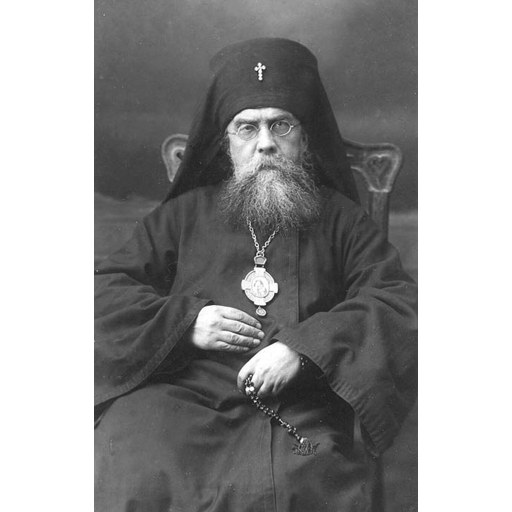
fond.ru
License: Public domain
Nicholas
Saint- Gender
- male
- Church
- Eastern Orthodox
Places
Relics & Where to Venerate
Location unknown
The bodily remains of Nicholas are a first-class relic. Venerated at Butovo firing range.
Biography
The name Nicholas is borne by a great many bishops, monks, missionaries, and lay holy men in Christian history, especially in the Greek, Slavic, Latin, and Oriental churches. The Wikidata identifier Q4320622 is not independently corroborated in standard historical or hagiographical reference works available here as belonging to one unique, fully documented individual. Because the given name is so common, and because office-holding years, legendary vitae, and later cults are frequently confused with one another in secondary lists, no birth year, death year, see, or patronage is assigned. Substituting the year a man became bishop, metropolitan, or patriarch for a birth year, or merging two different Nicholases, would violate the requirement to prefer a blank field over an unverified claim.
Among well-attested figures who share the name are Nicholas of Myra, a fourth-century bishop in Lycia whose cult later spread through Bari and the Latin West; several popes of Rome (Nicholas I in the ninth century, Nicholas II in the eleventh, and Nicholas III–V in later medieval centuries); the Swiss hermit Nicholas of Flüe in the fifteenth century; the Augustinian Nicholas of Tolentino; and the Russian missionary Ivan Kasatkin, known as Nicholas of Japan, who worked in the nineteenth and early twentieth centuries. Eastern synaxaria also commemorate fools-for-Christ, wonderworkers, and local bishops named Nicholas whose lives are known only from brief notices. None of these identifications can be tied with certainty to Q4320622 on the information given.
Hagiographical sources for lesser-known bearers of the name are often late, regional, and mixed with miracle collections. Places of birth and burial, marital status, and whether the person had children are frequently unrecorded even when a feast day appears in a menologion. Religious profession (monk, secular cleric, or married clergy in traditions that permitted it) likewise cannot be assumed. The offices of pope (Bishop of Rome or Coptic Pope of Alexandria) and patriarch or catholicos are held by only a small subset of men named Nicholas; without a verified link to a specific see, those fields remain empty.
In the absence of a stable correspondence between this QID and a primary chronicle, a critical vita, or a standard modern biographical dictionary, the only facts treated as secure are the masculine given name and the general historical setting of Christian ecclesiastical biography. All other elements—dates, cities, order, spouse, children, canonization or beatification, and patronages—are left unfilled rather than inferred from homonymous saints. Further precision would require direct inspection of the Wikidata item and the sources it cites.