Nicholas (Mogilevski) is a saint of the Catholic Church (1877 - 1955). Nicholas (Mogilevski)'s feast day is celebrated on October 12 and October 25.
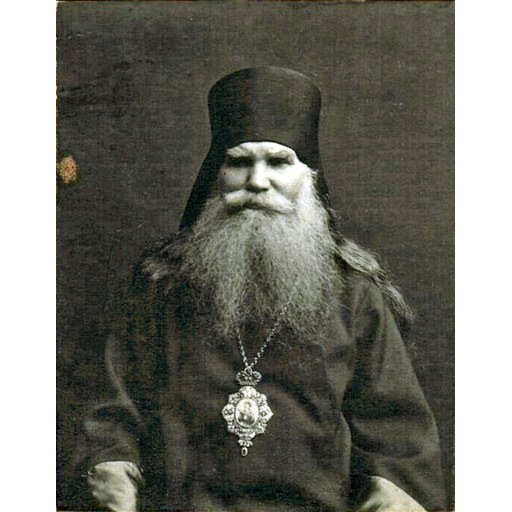
Unknown authorUnknown author
License: Public domain
Nicholas (Mogilevski)
Saint- Life Span
- 1877 - 1955 (age 78)
- Feast Day
- October 12 and October 25
- Gender
- male
- Church
- Catholic
Places
Roles & Family
Canonization
Biography
Nicholas (Mogilevsky), in the world Feodosy Nikitich Mogilevsky, was born on 7 April 1877 in the village of Kamenskoye in the Ushitsky Uyezd of the Podolia Governorate of the Russian Empire, the son of a church psalmist. He was educated for the clergy at the Podolsk Theological Seminary, graduating in 1898, and then at the Kiev Theological Academy, from which he received the degree of candidate of theology in 1902. In 1904 he received the monastic tonsure with the name Nicholas, in honor of Saint Nicholas of Myra, and was ordained hierodeacon and hieromonk. He subsequently taught and held administrative posts at theological seminaries of the Russian Empire, including institutions in Poltava and Chernigov, following the ordinary path of a learned monastic cleric in the pre-revolutionary Church.
In 1919, amid the collapse of imperial order and the Russian Civil War, he was consecrated Bishop of Starodub, a vicar of the Chernigov diocese. In the early Soviet period he served in further vicarial capacities and was among the hierarchs who rejected the Renovationist schism, which the state encouraged as a means of dividing and controlling the Church. Like a great many Orthodox bishops of his generation he was repeatedly arrested, imprisoned, and sent into internal exile. He spent long years in camps and banishment, including in Kazakhstan, during the anti-religious campaigns of the 1920s and 1930s, and belonged to the so-called catacomb and surviving canonical episcopate that refused to compromise with the schism or with the destruction of parish life.
After the wartime change in Soviet religious policy he was appointed in 1945 to govern the diocese of Alma-Ata and Kazakhstan, first as archbishop and later as metropolitan. The territory had been almost stripped of open churches. From 1945 until his death he worked to restore parish life over a vast Central Asian region, reopening churches, ordaining clergy, and gathering a scattered flock. Contemporary testimony from clergy and laity describes him as a man of unceasing prayer, spiritual discernment, and practical charity, to whom people came as to an elder. He was widely regarded in Kazakhstan as a confessor who had preserved the faith through imprisonment and who then rebuilt church life without theatricality or political display.
Metropolitan Nicholas died in Alma-Ata on 25 October 1955 and was buried in the city cemetery. In August 2000 the Jubilee Bishops' Council of the Russian Orthodox Church glorified him among the New Martyrs and Confessors of Russia. His relics were later uncovered and enshrined in St. Nicholas Cathedral in Almaty, where they remain an object of veneration. The Russian Orthodox Church commemorates him on the date of his repose and on the date associated with the uncovering of his relics. He is remembered as a monastic bishop, a victim of Soviet persecution, and the principal restorer of Orthodox church life in Kazakhstan in the mid-twentieth century.