Nikon of Radonezh is a venerable of the Catholic Church (d. 1426). Nikon of Radonezh's feast day is celebrated on 17 November.
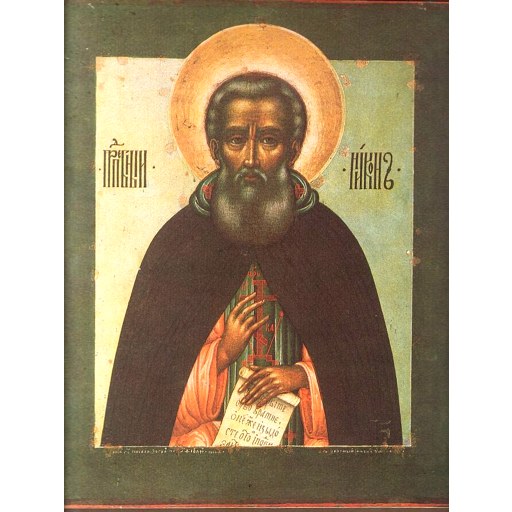
Simon Ushakov
License: Public domain
Nikon of Radonezh
Venerable- Life Span
- d. 1426
- Feast Day
- 17 November
- Gender
- male
- Church
- Catholic
Places
Roles & Family
Canonization
Biography
Nikon of Radonezh was a Russian Orthodox monk and abbot of the late fourteenth and early fifteenth centuries, remembered as the closest disciple of Saint Sergius of Radonezh and as the second hegumen of the Trinity Monastery, later the Trinity-Sergius Lavra. According to his Life, composed in the fifteenth century by the hagiographer Pachomius the Serb (Pakhomy Logofet), he was born in the town of Yuryev-Polsky to pious Christian parents. From youth he was drawn to prayer and the monastic life. Hearing of Sergius’s spiritual labors in the forests near Radonezh, he left home, sought out the elder, and was received into the small wilderness community. Sergius instructed him in the monastic rule and in due course tonsured him. Nikon remained at his teacher’s side, distinguished in the sources by humility, obedience, and strict ascetic practice.
Toward the end of his life, in 1392, Saint Sergius wished to name Nikon as successor in the office of hegumen. Nikon declined out of humility, and Sergius instead appointed Saint Savva, later known as Savva of Storozhi. After Savva left the Trinity Monastery to found a new house near Zvenigorod, the brethren elected Nikon as hegumen. As abbot he sought to preserve the cenobitic discipline and the spirit of poverty and prayer that Sergius had established, and he was regarded as a continuator of his elder’s way of life rather than as an innovator.
In 1408 the monastery was destroyed during the raid of the Tatar emir Edigu. Hagiographical tradition relates that Nikon was warned in a vision by Saint Sergius and led the brethren to safety with the community’s sacred objects. After the raiders withdrew, he returned and undertook the restoration of the house. Under his direction a stone cathedral dedicated to the Holy Trinity was built over the tomb of Saint Sergius; Sergius’s relics were uncovered in 1422 and placed in the new church. Nikon invited the iconographers Andrei Rublev and Daniil Cherny to decorate the cathedral. The celebrated Old Testament Trinity icon associated with Rublev is connected with this commission, carried out in the mid-1420s for the rebuilt monastery.
Nikon remained hegumen until his death on 17 November 1426 and was buried at the Trinity Monastery near his teacher. His memory was kept by the brethren, and his Life was written within a few decades. In the sixteenth century his relics were uncovered, an event commemorated on 7 July, and in the seventeenth century a church dedicated to him was erected over his grave, adjoining the Trinity Cathedral. He is venerated as a saint in the Eastern Orthodox Church, especially in the Russian tradition. His principal feast is 17 November (Julian calendar). He is also commemorated with Saint Sergius and in the Synaxis of the Saints of Radonezh. His historical importance lies in his governance of the monastery after Sergius’s death, in the building of the stone Trinity Cathedral, and in bringing Rublev’s workshop to the house that became a central monastery of Muscovite Rus'.