Notker of Liège is a blessed of the Catholic Church (d. 1008). Notker of Liège's feast day is celebrated on 10 April.
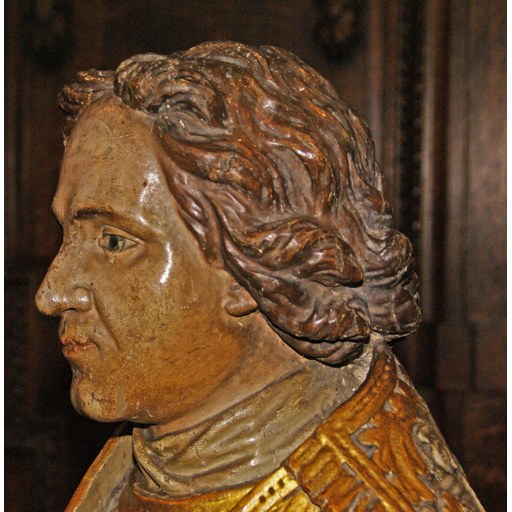
Flamenc
License: CC BY-SA 3.0
Notker of Liège
Blessed- Life Span
- d. 1008
- Feast Day
- 10 April
- Gender
- male
- Church
- Catholic
Places
Roles & Family
Religious Information
Biography
Notker of Liège, also known as Notger, was a tenth-century Benedictine monk and bishop whose long episcopate shaped the medieval city and principality of Liège. He was of noble Swabian origin and was formed at the Abbey of Saint Gall, one of the leading monastic schools of the East Frankish kingdom. After serving as a monk and as provost of Saint Gall, he entered the service of Emperor Otto I as a court chaplain. In 972 the emperor appointed him to the see of Liège in Lower Lotharingia, which he occupied until his death more than three decades later.
During his episcopate Notker acted as a trusted counselor to the Ottonian rulers Otto I, Otto II, Otto III, and Henry II. He took part in imperial politics in Lotharingia and beyond, helping to secure the loyalty of the region to the German kings and intervening in affairs that touched both the empire and the neighboring West Frankish realm. His close relationship with the court enhanced the status of his bishopric and contributed to the emergence of Liège as an ecclesiastical principality with substantial temporal power. He is often regarded as a principal architect of that prince-bishopric as a territorial lordship.
Notker is especially remembered as a builder and urban organizer. He reconstructed and enlarged the cathedral of Saint Lambert, erected a palatine chapel dedicated to Saint John the Evangelist on the model of Aachen, and founded or restored several collegiate churches, among them Saint Paul, Saint Denis, and Holy Cross. He surrounded Liège with defensive walls, developed the episcopal palace, and encouraged settlement, thereby giving the city much of the topographic framework it retained in later centuries. These works expressed both pastoral concern and the political ambition of a prince-bishop.
Under his rule the schools of Liège gained a high reputation, drawing clerks and scholars and making the city an important center of learning in the late tenth century. Notker died in Liège on 10 April 1008 and was buried in the cathedral of Saint Lambert. He has been venerated locally as a saint, and his feast is kept on the anniversary of his death. Later tradition in Liège regarded him as a founding figure of the prince-bishopric and of the city’s medieval greatness.