Onesimus of Soissons is a saint of the Catholic Church (d. 361). Onesimus of Soissons's feast day is celebrated on 13 May.
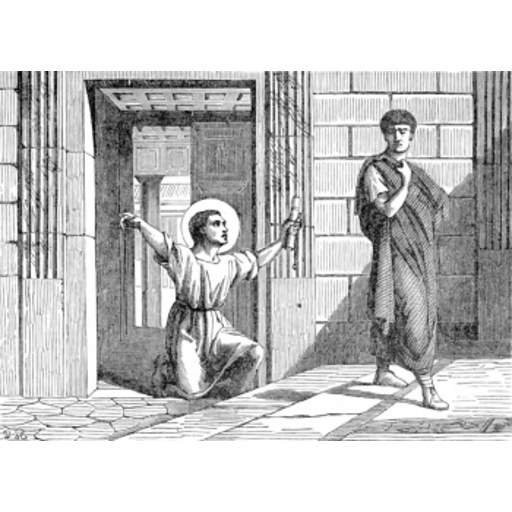
https://catholicsaints.info/tag/name-onesimus/
License: unknown
Onesimus of Soissons
Saint- Life Span
- d. 361
- Feast Day
- 13 May
- Gender
- male
- Church
- Catholic
Places
Roles & Family
Biography
Onesimus of Soissons, known in French as Saint Onésime, was a Christian bishop of the see of Soissons in northern Gaul during the fourth century. The city, then called Augusta Suessionum, belonged to the Roman province of Belgica Secunda. Later medieval episcopal catalogues of the diocese place him as the fifth bishop of that church, in a traditional sequence that begins with Saint Sixtus and continues through Saints Sinicius, Divitianus, and Rufinus. Those early lists were compiled centuries after the events they describe and cannot be confirmed from contemporary documents; they nevertheless represent the received tradition of the local church. No reliable source records the year of Onesimus’s birth, his parentage, or the circumstances of his early life, and claims that he was a native of Soissons rest on later hagiographical repetition rather than on dated evidence.
The fourth century was a formative period for the Gallic church. After the conversion of Constantine and the legalization of Christianity, episcopal sees in the cities of Gaul were consolidating their organization, building basilicas, and defining their place within the imperial church, even as they confronted the Arian controversy that divided East and West. Soissons, an important civitas of the Suessiones, would have shared in this process. Onesimus’s episcopate is placed by tradition in the middle decades of the century. Nothing is known of his specific acts as bishop: no letters, conciliar subscriptions, or contemporary notices survive that can be attributed to him with certainty. There is likewise no evidence that he belonged to a monastic order; like other urban bishops of his age he would have been a member of the secular clergy of his city.
Hagiographical tradition describes Onesimus as a disciple of Saint Sixtus, a figure associated both with the early church of Reims and with the first evangelization of Soissons. According to this tradition he received formation and possibly ordination from Sixtus before succeeding to the cathedra of Soissons. The chronological relationship between the legendary first bishops and a mid-fourth-century prelate is difficult to reconcile in detail, and modern historians treat the connection as pious tradition rather than established fact. He is not to be confused with the first-century Onesimus of the New Testament, the runaway slave mentioned in the Epistle to Philemon, who is a distinct saint with a different feast.
Onesimus died, according to the same traditional chronology, in or about 361, presumably at Soissons. His cult remained local. The diocese of Soissons observed his feast on 13 May. He was venerated as a saint from an early period by popular acclaim, in the manner of many Gallic bishops of late antiquity, rather than by a formal papal canonization of the later medieval type. No specific patronages of places, professions, or causes are securely attached to his name in the major martyrologies. The historical Onesimus is thus known almost exclusively through the episcopal lists and the liturgical memory of his own church; the scarcity of contemporary evidence is typical of many fourth-century bishops of Gaul whose names were preserved because their sees continued to honor them as holy predecessors.