Padre Raffaele of Sant'Elia a Pianisi is a venerable of the Catholic Church (1816 - 1901). Padre Raffaele of Sant'Elia a Pianisi's feast day is celebrated on 6 January.
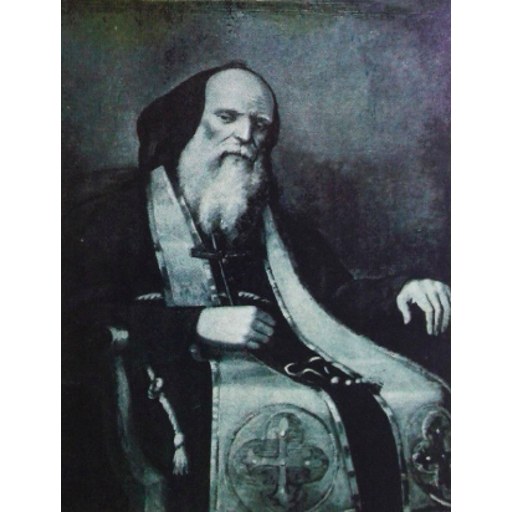
Unknown authorUnknown author
License: Public domain
Padre Raffaele of Sant'Elia a Pianisi
Venerable- Life Span
- 1816 - 1901 (age 85)
- Feast Day
- 6 January
- Gender
- male
- Church
- Catholic
Places
Roles & Family
Religious Information
Canonization
Biography
Padre Raffaele of Sant'Elia a Pianisi was born Domenico Petruccelli on 14 December 1816 in Sant'Elia a Pianisi, a hill town in Molise in southern Italy, then part of the Bourbon Kingdom of Naples. He came from a devout rural family and as a young man entered the Order of Friars Minor Capuchin, the austere Franciscan reform that had long been established in the Kingdom of Naples. He received the Capuchin habit and the religious name Raffaele, completed novitiate and studies, and was ordained a priest in the early 1840s. Thereafter his whole religious life was spent in the Capuchin houses of the Sannio-Molise region, above all those connected with the convent of Morcone, an important house of formation for the province.
He was not a prelate or a nationally famous preacher, but a friar of hidden and ordinary observance. He took his turn at the traditional Capuchin work of questing for alms to support the community, which brought him among the poor and the village people of the district, and he served his brothers in the domestic labours of the convent. Those who knew him remembered silence, personal austerity, devotion to the Mass and to Eucharistic prayer, and a filial love of the Virgin Mary. As a priest he heard confessions and gave spiritual counsel, and a local reputation for holiness gathered around him over the middle and later decades of the nineteenth century.
His long life covered the end of Bourbon rule, the revolutions of 1848, Italian unification, and the laws of the new Kingdom of Italy that in the 1860s suppressed many religious houses and scattered communities. Like other Italian regulars of his generation he had to live his vows in a climate often hostile to monastic institutions, and he persevered in the Capuchin life into old age. He died on 6 January 1901, the feast of the Epiphany, at the Capuchin convent of Morcone in the province of Benevento.
Veneration of his memory continued among the faithful of Molise and Campania and among the Capuchins of his province. That same province, a few years later, received the young Francesco Forgione, later Saint Pio of Pietrelcina, who entered the Capuchins at Morcone in 1903; Raffaele thus belongs to the same spiritual and geographic world, though he died before Pio's novitiate. A cause of beatification was opened in due course. The Church recognized that he had practised the virtues to a heroic degree and declared him Venerable; a miracle attributed to his intercession was later approved. Pope Francis authorized his beatification, and he is honoured as Blessed Raffaele of Sant'Elia a Pianisi, with his liturgical memorial on 6 January, the day of his death. He is remembered as an example of hidden holiness in nineteenth-century southern Italian Franciscan life.