Paschasia is a saint of the Catholic Church. Paschasia's feast day is celebrated on 9 October.
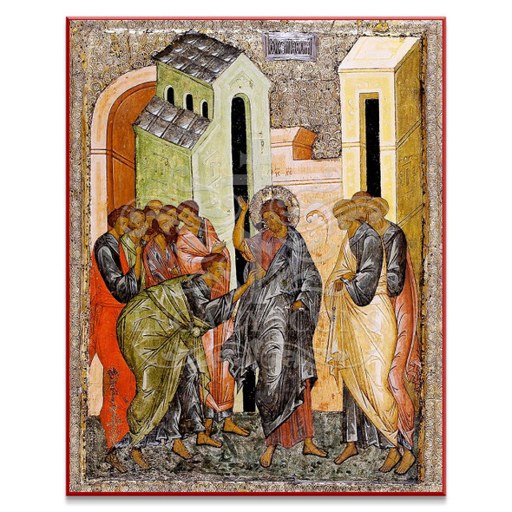
https://legacyicons.com/icons/pascha/?page=1&sort=pricedesc
License: unknown
Paschasia
Saint- Feast Day
- 9 October
- Gender
- female
- Church
- Catholic
Places
Roles & Family
Biography
Saint Paschasia, known in French sources as Sainte Paschasie, is an early Christian figure whose memory is preserved almost entirely through the legendary Passio of Saint Benignus of Dijon. In that tradition she is a Christian virgin living at Dijon in Roman Gaul in the later second century. When the missionary Benignus arrived to preach, she received him into her house and supported his work. The same legend presents Benignus as a disciple sent by Saint Polycarp of Smyrna, a claim modern historians regard as anachronistic and intended to give apostolic colour to a local Burgundian cult.
The hagiographical account further states that Paschasia herself was later martyred for the faith. No independent contemporary evidence—inscriptions, authentic acts, or early ecclesiastical records—confirms her existence, her hospitality to Benignus, or the circumstances of any martyrdom. The cult of Benignus was actively developed in the sixth century by Gregory of Langres, who reported the discovery of Benignus’s tomb; Paschasia’s name was carried along as part of that local tradition rather than as a saint of the universal Church. She is consistently styled a virgin, indicating that she was understood to have lived in consecrated celibacy.
Relics attributed to her were kept in Dijon in later centuries and are associated in some notices with the church of Saint-Jean. Her feast appears on 9 October in certain older martyrologies and local calendars. She is not a prominent entry in the general Roman Martyrology, and her veneration remained essentially regional. Critical hagiography treats both Benignus and Paschasia as figures whose historical reality cannot be securely established and whose legends were shaped by the pastoral and civic needs of early medieval Burgundy.
Virtually nothing else can be verified: family, precise dates of birth or death, and the details of any passion are unknown. Paschasia belongs to the type of pious laywoman who, in the literature of early Gallic Christianity, appears as hostess and supporter of a missionary and as a fellow witness. Her story, historically elusive, nevertheless formed part of the religious landscape of Dijon for many centuries.