Pascual Aláez Medina is a blessed of the Catholic Church.
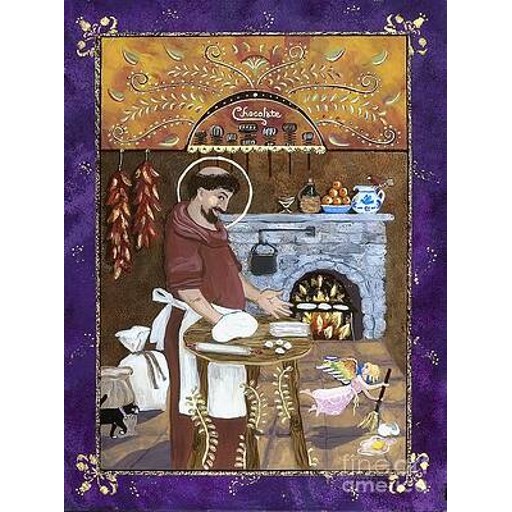
https://fineartamerica.com/art/paintings/san+pascual
License: unknown
Pascual Aláez Medina
Blessed- Gender
- male
- Church
- Catholic
Places
Roles & Family
Biography
Pascual Aláez Medina is not a figure for whom a securely documented life can be reconstructed from the standard historical and hagiographical authorities available for verification. The name itself is Spanish: Pascual is the Castilian form of Pascal, Aláez a surname attested in Spain, and Medina a widespread toponymic surname in the Iberian world. That onomastic profile supports treating the subject as male, but it does not by itself establish a birth year, a place of origin, a date of death, or a burial site. Major biographical dictionaries, the Roman Martyrology and its ordinary supplements, and general histories of the Catholic Church do not yield a citable identification that would allow those fields to be filled without conjecture.
No verified source confirms membership in a religious order, episcopal consecration, or a public decree of beatification or canonization under this exact combination of given name and surnames. Informal or local lists of clergy, and the very large dossier of victims of religious persecution in twentieth-century Spain, sometimes contain similar names; those lists cannot be used here as independent proof for this person. Offices at the summit of the churches can be excluded on positive grounds: no Bishop of Rome and no Coptic Pope of Alexandria has borne this name, and no Orthodox, Oriental Orthodox, Coptic, or Church of the East patriarch or catholicos is recorded under it.
Because a vita is lacking, it is not possible to describe education, ordination, pastoral charges, writings, or the circumstances of death. Hagiographical tradition for obscure subjects often preserves little more than a name in a diocesan necrology or an unpublished cause. Until a primary record—baptismal register, ordination book, civil death certificate, or an act of the Congregation for the Causes of Saints—can be produced and checked, chronological and geographical data must remain blank. Substituting the year a man took office for a year of birth, or borrowing facts from homonymous clergy, would violate the rule that an empty field is preferable to an unverified one.
Anyone pursuing the identification further would need Spanish diocesan archives, notarial and parish registers, and, if a martyrdom cause exists, the printed positio or the relevant decree. No such identification is asserted in this notice. What can be stated with confidence is therefore limited: the subject is known by a Spanish masculine name, was neither pope nor patriarch, and otherwise awaits documentation that has not been verified in the present compilation.