Paterius is a saint of the Catholic Church (d. 606). Paterius's feast day is celebrated on 21 February.
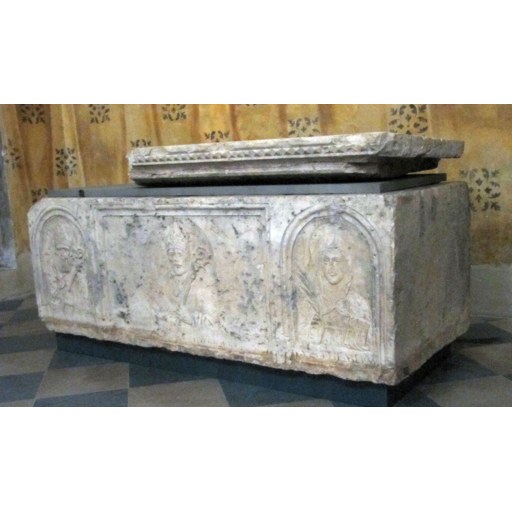
RobyBS89
License: CC BY-SA 3.0
Paterius
Saint- Life Span
- d. 606
- Feast Day
- 21 February
- Gender
- male
- Church
- Catholic
Places
Roles & Family
Biography
Paterius (Italian: Paterio) was a seventh-century Italian cleric, papal notary, and bishop whose life is known only in outline from later liturgical notices and from the survival of a work he compiled. He served as a notary of the Apostolic See in Rome during the pontificate of Pope Gregory I (Gregory the Great, 590–604) and is consistently described in the sources as a disciple and close collaborator of that pope. No contemporary document records his parentage, year of birth, or place of origin; historians therefore treat his early life as unknown. His documented activity belongs entirely to the late sixth and very early seventh centuries in Rome and in northern Italy.
While attached to the papal chancery, Paterius assembled a large florilegium of Gregory’s exegetical remarks on Scripture. The collection, commonly cited as the Liber testimoniorum or Liber de expositione Veteris ac Novi Testamenti quem Paterius ex dictis beati Gregorii papae in unum collegit, extracts and rearranges Gregory’s comments—chiefly on the Old Testament—according to the order of the biblical books. The work was not an original commentary but a systematic digest intended to make Gregorian interpretation more accessible. It circulated widely in manuscript throughout the early Middle Ages and became one of the principal channels by which Gregory’s biblical theology reached later monastic and cathedral schools.
After Gregory’s death, Paterius was appointed Bishop of Brescia, a see then situated in the Lombard kingdom of northern Italy. Traditional lists place his episcopate in the years immediately following 604 and assign his death to 606, implying a very short tenure. Virtually nothing is recorded of his pastoral acts, synodal activity, or relations with the Lombard authorities; he is remembered in Brescian tradition as a holy bishop rather than as a figure whose administration can be reconstructed in detail. The political and ecclesiastical setting was that of a recently converted Lombard realm still marked by Arian remnants and by the lingering effects of the Byzantine–Lombard wars.
Paterius was honoured as a saint in the diocese of Brescia and was entered in the Roman Martyrology, which commemorates him on 21 February with the notice “Brixiae sancti Paterii Episcopi.” No medieval vita of any length survives, and no reliable account identifies a precise burial church or a list of later patronages. His cult remained essentially local. The principal historical legacy of Paterius is therefore literary rather than biographical: the Testimonia continued to be copied, excerpted, and occasionally misattributed for centuries, preserving a substantial body of Gregorian exegesis that might otherwise have been less readily available to medieval readers.
Because the narrative sources are late and sparse, any reconstruction must remain cautious. Dates other than the traditional year of death, claims of a monastic profession at Gregory’s house on the Caelian Hill, and precise statements about relics or patronage rest on inference or later pious tradition rather than on documents that can be verified. What can be affirmed with reasonable confidence is that a Roman notary named Paterius, formed in the circle of Gregory the Great, compiled an influential biblical florilegium and ended his life as Bishop of Brescia in the first years of the seventh century.