Paul Miki is a saint of the Catholic Church (1562 - 1597). Paul Miki's feast day is celebrated on February 6. Paul Miki is the patron saint of Japan.
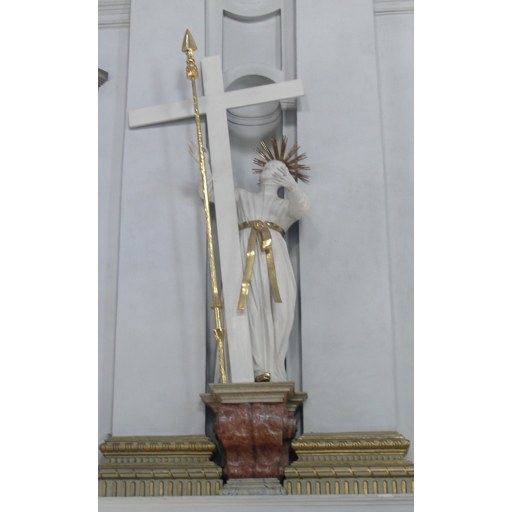
Photo: Andreas Praefcke
License: CC BY 3.0
Paul Miki
Saint- Life Span
- 1562 - 1597 (age 35)
- Feast Day
- February 6
- Gender
- male
- Church
- Catholic
Places
Roles & Family
Religious Information
Patronage
Japan
Canonization
Biography
Paul Miki was born in 1562 in Tsunokuni, in the Japanese province of Settsu, into a family of the warrior class. His father converted to Christianity and the household was baptized while Paul was still young. He was educated by the Jesuits at their colleges in Azuchi and later Takatsuki, receiving Christian doctrine together with the literary formation customary for young men of his station. As a young man he entered the Society of Jesus. He was never ordained a priest; at his death he remained a Jesuit scholastic whose principal work was preaching in the vernacular.
Miki became known as one of the most eloquent native preachers of the Japanese Church. He spoke Japanese and presented Christian teaching in terms intelligible to hearers formed by Buddhist and Confucian traditions. His ministry unfolded in the Kansai region during decades when the Christian community had grown under the tolerance of various daimyo, even as Japan’s unifiers grew more wary of foreign influence. In 1587 Toyotomi Hideyoshi promulgated an edict ordering the expulsion of missionaries. Enforcement was uneven for several years, but the legal and political position of Christians steadily worsened.
The immediate cause of the 1597 executions was the wreck of the Spanish galleon San Felipe on the coast of Tosa in 1596. Statements attributed to a member of the ship’s company, suggesting that missionaries prepared the way for Spanish conquest, were reported to Hideyoshi. He ordered the arrest of Christians in and around Kyoto. Paul Miki was taken together with Franciscan friars, two other Japanese Jesuits, and Japanese lay Catholics, among them several adolescents. The prisoners had a portion of an ear cut off and were then marched overland from the capital region to Nagasaki, a public humiliation meant to deter others.
On 5 February 1597 the twenty-six were fastened to crosses on Nishizaka Hill above Nagasaki harbor and killed by lance thrusts. From the cross Paul Miki preached, identifying himself as a Japanese and a Jesuit, denying any political crime, professing that he died solely for the teaching of Jesus Christ, and offering forgiveness to those who executed him. Contemporary Jesuit reports preserved versions of this address. He was about thirty-five years old.
The group known as the Twenty-six Martyrs of Japan was beatified by Pope Urban VIII in 1627 and canonized by Pope Pius IX on 8 June 1862. Their feast is observed on 6 February in the General Roman Calendar. Paul Miki is venerated as a principal native witness of the early Japanese Church and is invoked among the patrons of Japan. A monument and museum on Nishizaka Hill in Nagasaki commemorate the site of the crucifixions; relics of the martyrs were later distributed to churches in Japan and abroad.