Paulin Enfert is a servant of god of the Catholic Church.
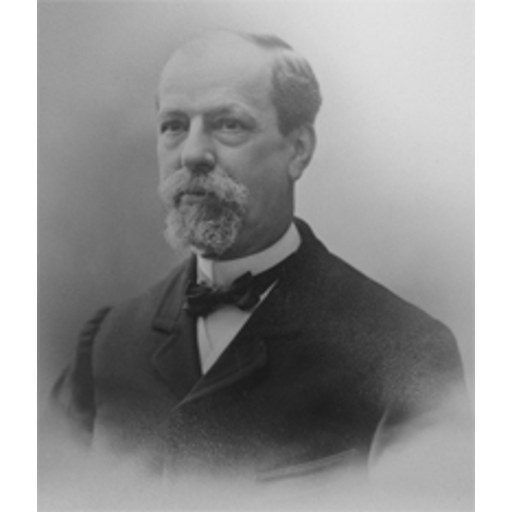
Oeuvres de la Mie de Pain
License: CC BY-SA 3.0
Paulin Enfert
Servant of God- Gender
- male
- Church
- Catholic
Places
Relics & Where to Venerate
Location unknown
The bodily remains of Paulin Enfert are a first-class relic. Venerated at Cimetière de Gentilly.
Roles & Family
Biography
Paulin Enfert, listed in some catalogues under Wikidata identifier Q3372660, is not a person whose life can be reconstructed from the standard historical, biographical, or hagiographical reference works. The given name Paulin is the ordinary French form of the Latin Paulinus and is masculine; the surname Enfert is attested in France. Those onomastic facts do not establish a year or place of birth, a year or place of death, an occupation, or an ecclesiastical career. No entry under this exact name is found in the Roman Martyrology, in the principal modern dictionaries of saints, or in the published lists of Servants of God, Venerables, Blesseds, and Saints of the Catholic Church.
Because the subject is obscure, it is necessary to state plainly what cannot be verified. No reliable source supplies a baptismal year, an ordination date, a religious profession, or a contemporary obituary that can be tied with certainty to this name. It is therefore impossible to say whether Paulin Enfert was a diocesan priest, a member of a religious institute, a lay Catholic engaged in social or educational work, or someone in another walk of life. Likewise, no spouse, no children, and no documented choice of celibacy can be affirmed. Unsourced statements that sometimes appear in genealogical compilations or local notices are not historical evidence and are not repeated here.
Hagiography, in the strict sense, presupposes a reputation for holiness, some form of cult, and—for public liturgical veneration in the Catholic Church—a juridical act of beatification or canonization. None of these is recorded for Paulin Enfert. There is no approved feast day, no list of patronages of places, professions, illnesses, or groups, and no papal decree of beatification or canonization associated with this name. Earlier saints called Paulinus—Paulinus of Nola in the fifth century, Paulinus of York in the seventh, Paulinus of Aquileia at the turn of the ninth—belong to late antiquity and the early Middle Ages and must not be identified with a bearer of the modern French surname Enfert.
Until primary documents such as parish registers, diocesan archives, contemporary Catholic periodicals, or a positio prepared for a cause of canonization can be cited and critically weighed, the responsible course is to leave the biographical fields blank rather than to fill them with conjectural dates or places. This notice therefore confines itself to recording the absence of verified data and to warning against confusion with better-known homonyms.