Paulin is a saint of the Eastern Orthodox Church.
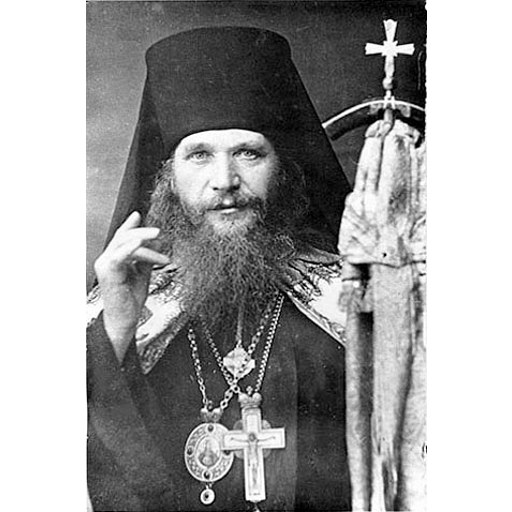
Unknown authorUnknown author
License: Public domain
Paulin
Saint- Church
- Eastern Orthodox
Places
Biography
The historical individual designated Paulin and associated with Wikidata identifier Q4341409 cannot be matched with confidence to a single, well-documented life in the principal martyrologies, episcopal lists, or ecclesiastical histories. Paulin is a vernacular form of the Latin Paulinus, a name borne by a number of bishops, confessors, and monks in the Latin West between the fourth and ninth centuries. Because the supplied identifier does not correspond in standard references to a unique see, a firmly attested feast, a surviving contemporary vita, or another distinguishing mark, no birth year, death year, places, or patronage can be assigned without conjecture.
Several better-known bearers of the name illustrate why substitution would be unsafe. A Gallo-Roman senator of Aquitaine in the later fourth century distributed his property, lived ascetically with his wife, and was chosen bishop of Nola in Campania; he is remembered as a poet and correspondent of Augustine and Jerome, with a feast on 22 June, yet he is catalogued under a different identifier. A Roman missionary of the early seventh century accompanied the second group sent to the English, baptized the Northumbrian king, and became the first bishop of York before dying at Rochester. A scholar at the Carolingian court served as patriarch of Aquileia and wrote against Adoptionism. A fourth-century bishop of Trier was exiled for Nicene orthodoxy and died in the East. Local French and Italian calendars mention still other Paulins of whom scarcely more than a name and a commemoration date survive.
Hagiographical notices for the more obscure figures of this name are typically limited to a liturgical entry or a brief mention in a diocesan catalogue. No reliable source links Q4341409 to any one of the lives just sketched, nor to a distinct monastic founder, hermit, or martyr whose cult can be verified independently. Consequently it is impossible to state whether the subject was a bishop, a monk, married or celibate, or the object of any particular patronage. Office-taking years, which are sometimes the only dated facts preserved for early bishops, must not be treated as birth years.
In the absence of a matching primary or early-medieval witness, the cautious course is to leave biographical particulars blank. Further work in unpublished liturgical manuscripts, local necrologies, or archival episcopal lists would be required before a firm identity, dates, or places could be offered. Until such evidence appears, the subject remains an insufficiently documented namesake among the several Paulini of late antiquity and the early Middle Ages.