Peter Donders is a saint of the Catholic Church (1809 - 1887). Peter Donders's feast day is celebrated on 14 January. Peter Donders is the patron saint of people with leprosy;Suriname.
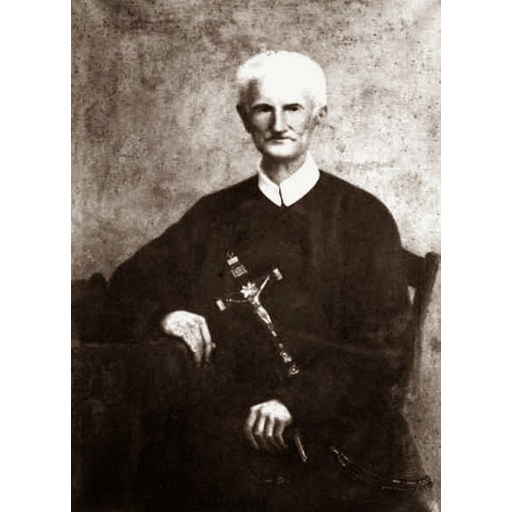
Unknown photographer
License: Public domain
Peter Donders
Saint- Life Span
- 1809 - 1887 (age 78)
- Feast Day
- 14 January
- Gender
- male
- Church
- Catholic
Places

Relics & Where to Venerate
Location unknown
The bodily remains of Peter Donders are a first-class relic. Venerated at Saint Peter and Paul Cathedral.
Roles & Family
Religious Information
Patronage
people with leprosy;Suriname
Canonization
Biography
Blessed Peter Donders (Petrus Norbertus Donders) was a Dutch Catholic priest and Redemptorist missionary whose life was spent almost entirely among enslaved people, Maroons, indigenous communities, and especially people confined with leprosy in the Dutch colony of Suriname. He was born on 27 October 1809 in Tilburg, in the southern Netherlands, to a poor weaving family; his parents were Arnold Donders and Petronella van den Brekel. Poverty forced him to work at the loom from a young age, and his schooling was irregular. He nonetheless held to a vocation to the priesthood. After years of delayed study he was accepted into the seminary of the Diocese of ’s-Hertogenbosch and was ordained a priest on 5 June 1841. He was regarded as a man of modest academic gifts but of unusual perseverance and piety.
Soon after ordination he volunteered for the overseas mission. He reached Paramaribo in 1842 and began a long ministry along the coast and rivers of Suriname. For more than a decade he served enslaved Africans still held under Dutch colonial slavery (abolished in the Dutch West Indian colonies in 1863), as well as free Black, Maroon, and Amerindian populations who were often neglected by both civil and ecclesiastical structures. He traveled by boat and on foot, lived with great personal austerity, and learned local languages, including Sranan Tongo, in order to preach and hear confessions. Contemporary accounts stress his patience, his refusal of comfort, and his identification with the poorest rather than with colonial elites.
In 1856 he was assigned to the government leper colony at Batavia on the Coppename River, a remote settlement where people with Hansen’s disease were isolated. There he remained, with only brief interruptions, until his death. He shared the patients’ isolation, celebrated the sacraments, dressed ulcers, and repeatedly petitioned colonial authorities for better food, housing, and medical care. When the Congregation of the Most Holy Redeemer (the Redemptorists) took charge of the Catholic mission in Suriname in 1866, Donders asked to enter the order. He made his religious profession in 1867 and continued the same work at Batavia as a Redemptorist, combining missionary preaching with daily care of the sick.
He died at Batavia on 14 January 1887. He was first buried at the colony; his remains were later transferred to Paramaribo and are venerated in the Cathedral of Saints Peter and Paul. A reputation for holiness persisted in Suriname and in the Netherlands. The cause for beatification advanced in the twentieth century, and Pope John Paul II beatified him in Rome on 23 May 1982. His liturgical memorial is kept on 14 January. He has not been canonized. He is remembered above all as a missionary who chose to live with people suffering from leprosy and with those at the margins of a plantation colony, and he is invoked in connection with Suriname and with the care of people with Hansen’s disease.