Peter of Anagni is a saint of the Catholic Church (d. 1105). Peter of Anagni's feast day is celebrated on 3 August. Peter of Anagni is the patron saint of Anagni.
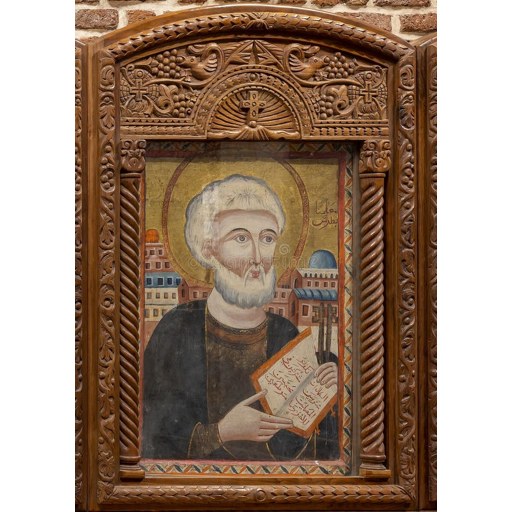
https://www.dreamstime.com/photos-images/icon-peter-saint.html
License: unknown
Peter of Anagni
Saint- Life Span
- d. 1105
- Feast Day
- 3 August
- Gender
- male
- Church
- Catholic
Places
Roles & Family
Religious Information
Patronage
Anagni
Canonization
Biography
Peter of Anagni, known in Italian as Pietro da Anagni, was an eleventh-century Benedictine monk, bishop, and papal legate venerated as a saint in the Catholic Church. He was born in Salerno in southern Italy to a noble family of Norman descent, related to the princely house of Salerno. The year of his birth is not preserved in reliable sources. He received a religious education, entered the Benedictine order, and was ordained a priest. His reputation for austerity and learning brought him to the attention of the reforming papacy in the later eleventh century.
Pope Gregory VII appointed him Bishop of Anagni, an ancient see in the hills southeast of Rome with close ties to the medieval papacy. As bishop he rebuilt the cathedral of Anagni as a substantial Romanesque church, which Pope Paschal II consecrated in 1104. He is also credited with founding a hospital for the sick and the poor. His episcopate coincided with the Investiture Controversy and the Gregorian Reform, a period when popes often resided at or passed through Anagni and when the local church was drawn into the wider conflict over lay investiture and clerical discipline.
The Holy See employed Peter as a diplomat. He was sent as papal legate to Constantinople, to the court of the Byzantine emperor Alexios I Komnenos, in the years around the preaching of the First Crusade, when the Latin Church was seeking improved relations with the Eastern Empire. Later hagiographical tradition describes him as a wonder-worker and attributes miracles to him during his life and after his death, as is typical of the saint’s lives of this period.
Peter died at Anagni on 3 August 1105 and was buried in the cathedral he had restored. Pope Paschal II, who had known him and had dedicated that cathedral, canonized him a few years later, an act traditionally dated to 1109. His feast is kept on 3 August, and he is honoured as a patron of the city of Anagni. Surviving evidence for his career is limited and in part hagiographical, so many details of his youth and the exact chronology of his early life remain uncertain; the main outline of his episcopate, building work, eastern legation, death, and early papal canonization is nonetheless well established in medieval papal and local tradition.