Peter Paschasius is a saint of the Catholic Church (1227 - 1300). Peter Paschasius's feast day is celebrated on 6 December.
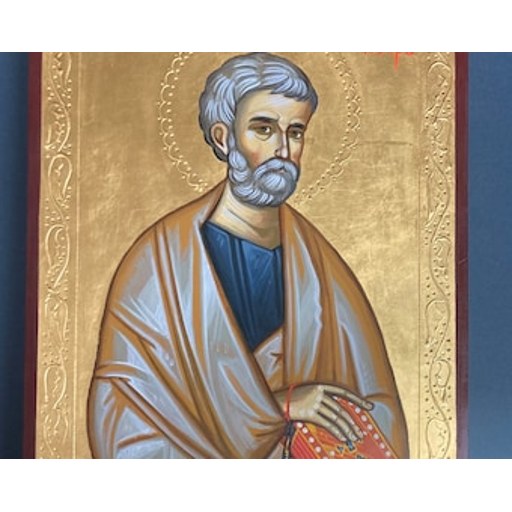
https://etsy.com/listing/1291369913/saint-peter-and-paul-the-apostles-hand
License: unknown
Peter Paschasius
Saint- Life Span
- 1227 - 1300 (age 73)
- Feast Day
- 6 December
- Gender
- male
- Church
- Catholic
Places
Roles & Family
Biography
Peter Pascual, known in Latin as Petrus Paschasius and in Spanish as Pedro Pascual, was a thirteenth-century Spanish theologian, bishop, and martyr. He was born in 1227 in Valencia, then in the Crown of Aragon, into a family of Mozarabic Christians—Iberian Christians who had preserved their faith and the old Visigothic liturgical tradition under earlier Muslim rule. He received his first education in his native city and later studied theology at the University of Paris, the foremost theological school of western Europe in that century. After taking a doctorate he was ordained a priest and returned to the Iberian Peninsula, where he became known as a preacher and as a writer against Islamic doctrine at a time when Christian and Muslim kingdoms still confronted one another across shifting frontiers.
In 1296 Pope Boniface VIII named him bishop of Jaén, a Castilian see in Andalusia that had been recovered from Muslim control in the mid-thirteenth century but remained exposed to raids from the neighboring Emirate of Granada. Traditional accounts also place him for a time as a preacher or tutor connected with the Aragonese court of James I, though the details of that service are not independently documented. As bishop he continued pastoral work on a military and religious frontier. While traveling in the exercise of his office he was captured by Granadan forces and taken to Granada, where he was held prisoner for nearly three years.
During captivity he is said to have ministered to other Christian prisoners, to have refused repeated offers of freedom in exchange for conversion to Islam, and to have composed or dictated treatises defending the Trinity and criticizing the Qur’an. On 6 December 1300 he was beheaded. Contemporary and later Christian sources regarded the execution as martyrdom suffered for the faith. Several anti-Islamic works have been attributed to him; modern scholarship accepts some of this literary corpus while questioning the authenticity or the date of other texts that circulated under his name.
After his death a cult developed in Spain, especially in Valencia and Andalusia. The Mercedarian Order, whose mission was the ransom of Christian captives, later claimed him as a member, but no contemporary evidence supports that affiliation and historians treat it as a subsequent tradition. He is entered in the Roman Martyrology on 6 December and is venerated as a saint in the Catholic Church. Precise records of his burial and of any formal process of canonization or confirmation of cult in the later seventeenth century remain incomplete in the sources commonly available.