Petro Tuan Ba Nguyen is a saint of the Catholic Church (1766 - 1838). Petro Tuan Ba Nguyen's feast day is celebrated on 24 November.
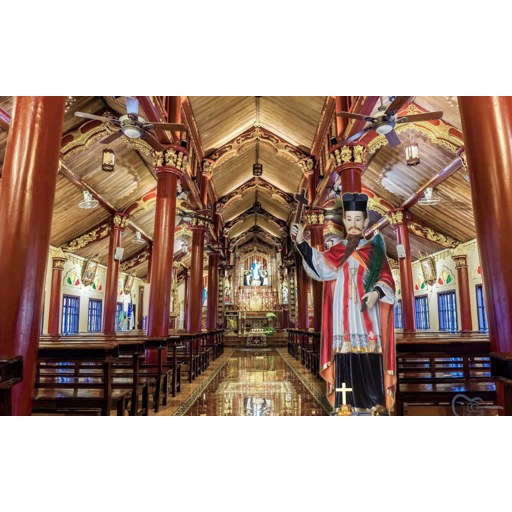
Petro Tuan Ba Nguyen
Saint- Life Span
- 1766 - 1838 (age 72)
- Feast Day
- 24 November
- Gender
- male
- Church
- Catholic
Places
Roles & Family
Canonization
Biography
Petro Tuan Ba Nguyen, known in Vietnamese as Phêrô Nguyễn Bá Tuần, was a Roman Catholic priest and martyr of nineteenth-century Vietnam. He was born in 1766 in the village of Ngọc Cục in Nam Định Province in the northern region then commonly called Tonkin. Catholicism had been present in that area since the seventeenth century through Portuguese, Spanish, and French missionary work. He was ordained as a diocesan priest and served local Catholic communities during the Nguyễn dynasty, at a time when emperors increasingly treated Christianity as a heterodox teaching and a political threat linked to European influence.
Under Emperor Minh Mạng (reigned 1820–1841) edicts against Christians grew harsher, producing waves of arrests, demands that believers trample the cross, torture, and executions. Father Nguyễn Bá Tuần continued his ministry despite the danger. In 1838 he was arrested for his priesthood and his refusal to apostatize. He was held in prison at Nam Định and subjected to the beatings and severe conditions typical of the anti-Christian campaigns of that decade. He died in custody on 15 July 1838 from the effects of this mistreatment rather than by public beheading, which was the fate of many other Vietnamese martyrs of the same period.
He belongs to the group of 117 Martyrs of Vietnam, Vietnamese and foreign, clergy and lay, who were killed for the faith between the mid-eighteenth and mid-nineteenth centuries under several Nguyễn emperors. A group of sixty-four of these martyrs, including Father Nguyễn Bá Tuần, was beatified by Pope Leo XIII on 27 May 1900. On 19 June 1988 Pope John Paul II canonized all 117 together in Rome. The Catholic Church observes their collective feast on 24 November.
Beyond the core facts of his birthplace, priesthood, arrest, and death in prison, few further personal details—such as family background, the exact course of his studies, or specific pastoral assignments—are preserved in standard historical and hagiographical sources. His memory is maintained within the larger cultus of the Vietnamese martyrs, who remain especially venerated by the Church in Vietnam and by Vietnamese Catholic communities in the diaspora.