Petrus Armengol is a venerable of the Catholic Church (1238 - 1304). Petrus Armengol's feast day is celebrated on 27 April.
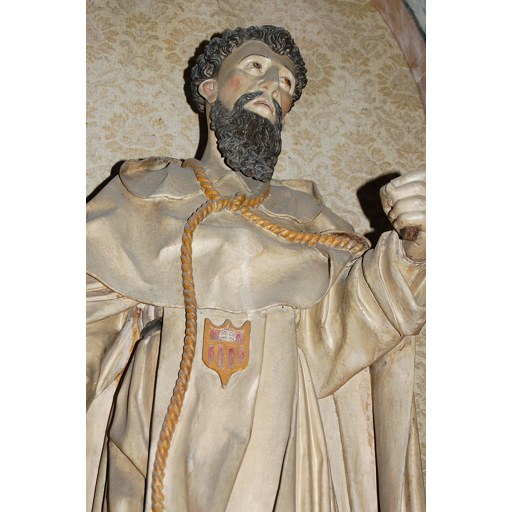
Noucho
License: CC0
Petrus Armengol
Venerable- Life Span
- 1238 - 1304 (age 66)
- Feast Day
- 27 April
- Gender
- male
- Church
- Catholic
Places
Relics & Where to Venerate
Location unknown
The bodily remains of Petrus Armengol are a first-class relic. Venerated at Sant Jaume de la Guàrdia dels Prats.
Roles & Family
Religious Information
Canonization
Biography
Petrus Armengol, known in Catalan as Pere Ermengol and in Spanish as Pedro Armengol, was a thirteenth-century Mercedarian friar whose life is known chiefly through later hagiographical tradition. He was born in 1238 at La Guàrdia dels Prats, a village in the county of Prades in Catalonia, then under the Crown of Aragon. He belonged to the noble Ermengol family; his father Arnau (Arnold) Ermengol served King James I of Aragon and was entrusted with responsibilities that included the suppression of brigandage. In adolescence and early manhood Pedro rejected this background and took to the hills as the leader of a band of robbers, preying on travelers in the mountainous country of Catalonia. The traditional narrative states that his father, sent to restore order, captured the band and recognized his son among the prisoners. The shock of this meeting, together with his father's clemency, is presented as the turning point that led Pedro to abandon banditry and seek a religious life.
He entered the Order of Our Lady of Mercy, commonly called the Mercedarians, which had been founded in Barcelona in the early thirteenth century by Peter Nolasco for the redemption of Christians held captive in Muslim territories. The order was distinguished by a fourth vow, in addition to poverty, chastity, and obedience: members pledged to remain as hostages if necessary so that captives might go free. Armengol took the habit in Barcelona, according to the customary account in the later 1250s, and was trained in the work of collecting alms for ransoms and of traveling to the ports and courts of North Africa and the Iberian frontier. He is said to have taken part in several redemption expeditions.
The episode that dominates his legend occurred on a mission to North Africa, usually located at Béjaïa (medieval Bugia) on the Algerian coast. When the agreed ransom could not be produced in time, Armengol offered himself in place of the remaining captives. The authorities, the story continues, hanged him from a gallows or a tree and left him for dead. Companions of the order who arrived with the delayed funds found him still living, though his neck had been elongated and twisted by the rope. This deliverance was attributed to the intercession of the Virgin Mary, under whose patronage the Mercedarians worked. He was cut down, ransomed or released, and returned to Catalonia, carrying for the rest of his life the visible deformity of the hanging.
Thereafter he withdrew to the Mercedarian community in his native La Guàrdia dels Prats. He spent several decades there in a retired life of prayer, penance, and the ordinary duties of a religious house, the damaged neck remaining a mark of the African ordeal. He died in that convent on 27 April 1304. His body was kept in the local church, where a cult developed among the people of the district and within the Mercedarian order. In the seventeenth century, during a period of renewed attention to medieval Mercedarian figures, Pope Innocent XI confirmed the public ecclesiastical cult of Armengol in 1686, which in the practice of the time amounted to beatification. He is commemorated on 27 April. Surviving evidence for the details of his career is late and hagiographical; modern historians treat the conversion from brigandage, the hostage-hanging, and the miraculous survival as elements of a traditional vita rather than as independently documented events, while accepting that a Mercedarian named Pere Ermengol from La Guàrdia dels Prats was venerated there from the later Middle Ages.