Philip Benizi de Damiani is a saint of the Catholic Church (1233 - 1285). Philip Benizi de Damiani's feast day is celebrated on 23 August. Philip Benizi de Damiani is the patron saint of Servite Order.
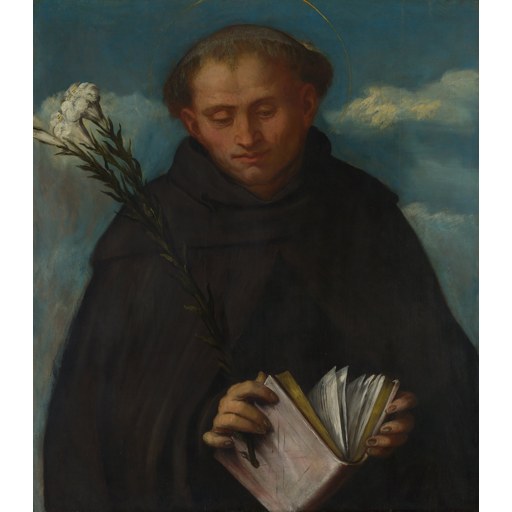
Girolamo Romanino
License: Public domain
Philip Benizi de Damiani
Saint- Life Span
- 1233 - 1285 (age 52)
- Feast Day
- 23 August
- Gender
- male
- Church
- Catholic
Places
Roles & Family
Religious Information
Patronage
Servite Order
Canonization
Biography
Philip Benizi de Damiani was born in Florence on 15 August 1233, into a prominent family of that city. Traditional accounts of his childhood emphasize piety and an early inclination toward learning and charity. He pursued higher studies in philosophy and medicine, and later writers record that he attended the universities of Paris and Padua before returning to Florence to practice as a physician. In 1254, according to Servite tradition, he experienced a call from the Virgin Mary while at prayer and entered the recently founded Order of the Servants of Mary at Monte Senario, the mountain hermitage of the Seven Holy Founders. He received the Servite habit and, after a period of formation marked by austerity and study, was ordained to the priesthood about 1258 or 1259.
Within the order Philip was soon entrusted with positions of responsibility. He served as prior of various convents and as vicar of the order before being elected, in 1267, the fifth Prior General of the Servites, an office he retained for the rest of his life. The Servite Order was still seeking full and stable papal recognition; Philip worked to obtain privileges and confirmations from the Holy See and to give the congregation a firmer institutional shape. He promoted new foundations in Italy and sent friars into Germany and other regions north of the Alps. Contemporaries and later hagiographers describe him as a preacher of notable power and as a worker of miracles, and he was frequently called upon to mediate in the violent struggles between Guelph and Ghibelline factions that divided many Italian communes in the thirteenth century.
A celebrated episode in his legend holds that, during the nearly three-year vacancy of the papacy after the death of Clement IV in 1268, Philip’s reputation led some to regard him as a possible pope. To escape the danger of election he is said to have fled and hidden in a cave on Monte Amiata in Tuscany. Whether or not every detail of this story can be verified, it became a fixed part of his cult and underscored the theme of his humility. He is also remembered for his role in the spiritual formation of other Servite saints: tradition links him with the conversion of Peregrine Laziosi at Forlì and with the clothing of Juliana Falconieri in the Servite habit. These associations helped to fix his image as a father of the order’s second generation.
In the summer of 1285 Philip undertook a journey that brought him to the Servite house at Todi in Umbria. There he fell ill and died on 22 August 1285. He was buried in the adjoining Servite church. Veneration of him grew first among the Servites and then more widely; the order obtained permission to keep his feast in the sixteenth century, and he was canonized by Pope Clement X on 12 April 1671. His liturgical memorial is observed on 23 August. He remains one of the principal saints of the Servite family and a figure of thirteenth-century Italian religious life, remembered as a superior, peacemaker, and model of contemplative and apostolic religious life.