Philip II, Metropolitan of Moscow is a saint of the Catholic Church (1507 - 1569). Philip II, Metropolitan of Moscow's feast day is celebrated on 9 January, 3 July, 23 December.
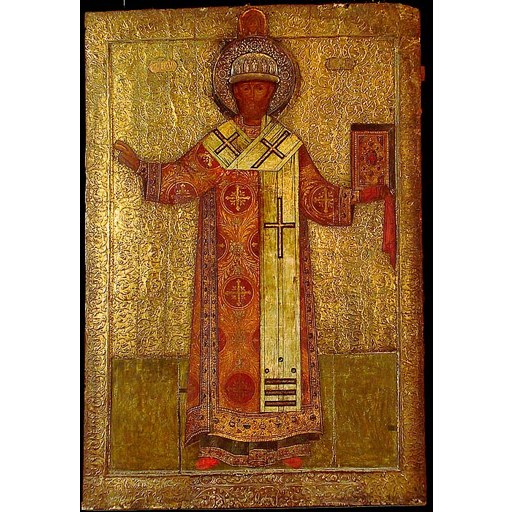
Simon Ushakov
License: Public domain
Philip II, Metropolitan of Moscow
Saint- Life Span
- 1507 - 1569 (age 62)
- Feast Day
- 9 January, 3 July, 23 December
- Gender
- male
- Church
- Catholic
Places
Relics & Where to Venerate
Location unknown
The bodily remains of Philip II, Metropolitan of Moscow are a first-class relic. Venerated at Dormition Cathedral.
Roles & Family
Canonization
Biography
Philip II, born Fyodor Stepanovich Kolychev in 1507, came from an old Muscovite boyar family related by kinship to the ruling house. He spent his youth at the court of Grand Prince Vasily III and, after Vasily’s death, at the court of the young Ivan IV. In 1537, during the unrest that followed the rebellion of Prince Andrei of Staritsa, he left Moscow, traveled north, and entered the Solovetsky Monastery on an island in the White Sea, receiving the monastic name Philip. After years of austere life and practical labor he was chosen hegumen in 1548. Under his direction the monastery was rebuilt in stone: the Cathedral of the Transfiguration and other churches were erected, canals and mills were constructed, and the community became one of the most prosperous in northern Russia.
In 1566 Tsar Ivan IV summoned Philip to occupy the vacant metropolitan see of Moscow and all Rus’. Philip accepted only after obtaining the tsar’s assurance that he might intercede for those condemned without trial and that the recently created oprichnina would not continue unchecked. Consecrated in July 1566, he soon found that Ivan had no intention of restraining the oprichniki. In 1568, during the Divine Liturgy in the Dormition Cathedral, Philip publicly refused to bless the tsar and denounced the murders and confiscations carried out in Ivan’s name. Further confrontations followed in the same year.
In November 1568 a synod packed with Ivan’s supporters deposed Philip on fabricated charges, stripped him of his vestments, and confined him first in Moscow and then in the Otroch Monastery at Tver. On 23 December 1569, while Ivan was marching on Novgorod, the oprichnik Malyuta Skuratov entered Philip’s cell and killed him, according to contemporary and later accounts on the tsar’s orders. He was buried at the Otroch Monastery.
In 1591 his relics were translated to the Solovetsky Monastery. In 1652 Tsar Alexis Mikhailovich had them brought with ceremony to Moscow and placed in the Dormition Cathedral of the Kremlin, an act that marked his formal glorification by the Russian Church. He is commemorated as a hierarch-martyr. The Russian Orthodox Church keeps his memory on 9 January (translation of 1591), 3 July (translation of 1652), and 23 December (the day of his death), as well as among the synaxis of Moscow hierarchs. Later generations invoked him as a model of episcopal resistance to princely violence.