Phocas, bishop of Sinope is a saint of the Pre-Schism (Universal) Church (d. 117). Phocas, bishop of Sinope's feast day is celebrated on July 23. Phocas, bishop of Sinope is the patron saint of sailors.
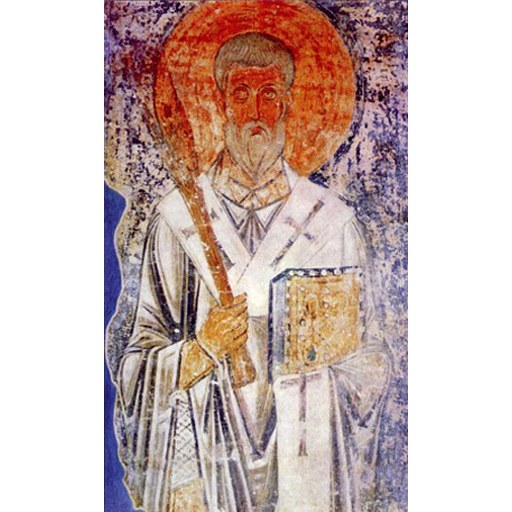
Ikonopisatel
License: Public domain
Phocas, bishop of Sinope
Saint- Life Span
- d. 117
- Feast Day
- July 23
- Gender
- male
- Church
- Pre-Schism (Universal)
Places
Roles & Family
Patronage
sailors
Biography
Saint Phocas served as bishop of Sinope, an ancient port city on the Black Sea coast of Pontus in Asia Minor, corresponding to modern Sinop in Turkey. Virtually nothing about his life can be confirmed from contemporary historical records. The principal sources are later hagiographical accounts, including a Greek passio whose composition is generally placed in the fourth or fifth century. These texts present him as a native of Sinope, born to Christian parents and distinguished from youth by piety, who was eventually chosen as bishop of the city.
Western liturgical tradition, as recorded in the Roman Martyrology, assigns his martyrdom to the reign of Emperor Trajan and the year 117. According to this narrative, a governor named Africanus arrived in Sinope, learned that the bishop was a Christian, and ordered his arrest. After imprisonment, chaining, and exposure to wild animals, Phocas was cast into a furnace of boiling water or a heated bath and died. Eastern Orthodox synaxaria likewise commemorate him as a hieromartyr who suffered under Trajan. A separate and possibly originally distinct figure, Phocas the Gardener of Sinope, is said to have been a humble horticulturist martyred under Diocletian around 303; later tradition frequently conflated or identified the two, so that details of hospitality, gardening, and a self-dug grave sometimes appear in accounts of the bishop as well.
The cult of Phocas spread widely in the Christian East. A church dedicated to him existed in Constantinople, and he came to be regarded as a special protector of sailors. Legends describe him appearing to mariners in peril at sea, often bearing a torch that guided them to harbor. Relics attributed to him were reported in Constantinople and were said in some medieval sources to have been translated to Vienne in Gaul. In the calendar of the Eastern Orthodox Church he is commemorated on 23 July; the Roman Martyrology lists him on 14 July. Additional commemorations on 22 September are associated with the gardener-martyr of the same name and city.
Because no writings of Phocas survive and no independent second-century or fourth-century documents mention him, the historical kernel of his biography remains uncertain. He stands as a representative of the early Christian community of Pontus that endured imperial persecution, whether in the early second century or the Great Persecution of the early fourth. Both the Catholic and Orthodox churches continue to honor him as a bishop and martyr.